
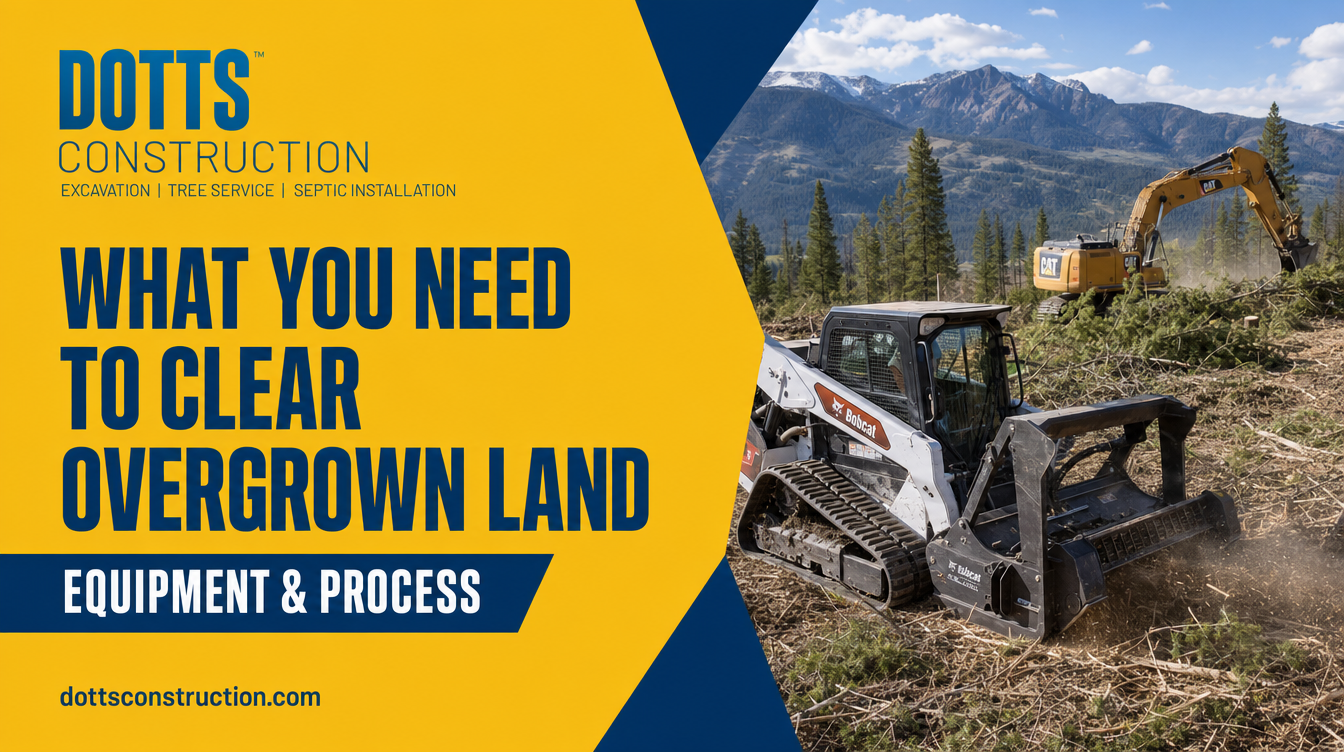
Facing an Overgrown Lot?
To clear overgrown land, you need a combination of heavy equipment, a sequenced clearing plan, and the right crew for your site's specific conditions. Most residential and commercial projects require an excavator, a forestry mulcher or brush cutter, and a loader or skid steer. The exact mix depends on land size, tree density, and what the cleared site will be used for next.
That last part matters more than most people realize. Clearing land for a foundation excavation is a completely different job than clearing it for a driveway. The equipment, the depth of grading, the soil work afterward, all of it changes. So let's break this down the right way.
What Equipment Is Used to Clear Overgrown Land?
Excavators are the backbone of any serious land clearing job. They can uproot mature trees, dig out stumps, move boulders, strip topsoil, and break through old concrete, all with one machine. That versatility is why most professional land clearing crews lead with an excavator.
Here is the full equipment breakdown for overgrown land:
- Excavator (full-size or mini): Used for uprooting trees, stump removal, boulder relocation, and initial site demolition. Full-size excavators handle large-scale site development. Mini excavators are the right tool for tighter residential lots where access is limited.
- Forestry mulcher: Grinds trees, brush, and dense vegetation directly into mulch on-site. Faster than hauling debris and great for sites where you want organic material returned to the soil.
- Brush cutter / land clearing attachment: Mounted on a skid steer or tractor, these cut through thick brush and light vegetation without the weight of a full excavator.
- Skid steer loader: Moves debris piles, pushes cleared material, and accesses tight areas where an excavator cannot maneuver cleanly.
- Bulldozer: For large acreage, a dozer pushes trees, stumps, and large debris into burn piles or windrows faster than any other machine.
- Stump grinder: After tree removal, stump grinders eliminate roots below grade so they do not interfere with footings, pipes, or paving.
- Dump trucks: Every land clearing job generates material that needs to move off-site. Dump trucks haul brush, debris, and soil so your site stays clean.
Pro Tip: The biggest mistake homeowners make is hiring a crew that only brings one type of machine. A single excavator can technically do most of the work, but a properly staffed job with an excavator plus a mulcher or skid steer cuts project time in half and produces a cleaner result.
How Do You Know What Equipment Your Land Actually Needs?
This depends on four site-specific factors:
- Vegetation density: Light brush and scrub require different tools than a plot packed with 60-foot hardwood trees. A site choked with mature oaks or pines needs a full-size excavator and a stump grinder at minimum.
- Land size: Anything under half an acre can typically be managed with a mini excavator and a skid steer. Larger parcels benefit from a bulldozer to move material efficiently.
- Soil conditions: Rocky soil or hardpan clay changes the grading plan. A crew doing land clearing near you needs to assess your soil before committing to a final approach, because hitting unexpected rock mid-project is one of the most common budget surprises in excavation work.
- End use: A site being cleared for a septic system installation requires precise grading and soil testing that a site cleared for a simple gravel driveway does not. Knowing the end use at the start prevents costly rework.
What Is the Land Clearing Process, Step by Step?
A professional land clearing crew follows a sequenced process. Skipping steps creates problems that show up later, sometimes after a foundation has already been poured.
1. Site assessment and marking
Before any machine touches the ground, the crew walks the property and marks utilities, drainage paths, boundary lines, and any vegetation being preserved. In many states, including areas we serve here at Dotts Construction, calling 811 (the national dig-safe line) before any ground disturbance is required by law, not optional.
2. Tree removal and felling
Large trees are felled in a controlled direction to avoid property damage. Smaller trees are often uprooted directly with the excavator bucket rather than cut, which removes the root ball in a single pass.
3. Brush and vegetation clearing
After the trees are down, brush, vines, and dense undergrowth are cut and mulched or hauled away. A forestry mulcher is the most efficient tool here for medium to large sites.
4. Stump grinding and root removal
Leaving stumps in place is not an option on any site going to construction use. Stumps rot and create voids in the soil. Roots left behind can grow back and crack pavement or interfere with drain fields. Grind to at least 12 inches below grade for construction prep.
5. Debris removal
All cleared material (tree limbs, root balls, organic debris) is either mulched on-site, burned where permitted, or loaded into dump trucks and hauled to a disposal facility.
6. Rough grading
The excavator or dozer shapes the land to its intended elevation and slope. This is where drainage is planned. Poor rough grading leads to water pooling against foundations, flooded driveways, and failed septic systems.
7. Final grading and soil compaction
Depending on end use, the site may need topsoil replacement, engineered fill, and compaction testing. For foundation excavation, compaction standards are non-negotiable.
How Does the Dotts 3M Method Make Land Clearing Go Smoother?
Most land clearing problems come down to one thing: poor planning before the first machine rolls on-site. At Dotts Construction, we use the Dotts 3M Method: Map, Mobilize, and Make Ready.
- Map: We walk your site, document existing conditions, identify drainage, utility conflicts, and soil concerns before writing a single line on an estimate. Most contractors skip this step and quote blind.
- Mobilize: We show up when we say we will with the right equipment for your specific site, not whatever happens to be available that week. This matters because construction schedules are tied to site work. Every day the land clearing is not done is a day your project sits still.
- Make Ready: We do not just clear land and leave. We grade it, compact it, and hand you a site that is genuinely ready for the next phase, whether that is foundation excavation, septic installation, driveway construction, or a grading inspection.
The positioning we are proud of: we are the excavation company that shows up when we promise, communicates every step, and gets your site ready so your construction project does not get derailed by contractor drama.
What Are the Different Methods for Clearing Overgrown Land?
Not every job calls for the same approach. Here is how the three primary clearing methods compare:
| Method | Best For | Equipment Used | Pros | Cons |
|---|---|---|---|---|
| Mechanical clearing | Most residential and commercial sites | Excavator, bulldozer, stump grinder | Fast, thorough, works on any density | Higher equipment cost |
| Forestry mulching | Sites with heavy brush, moderate trees | Forestry mulcher on skid steer or tracked carrier | Mulch stays on-site, reduces hauling cost | Less effective on very large trees |
| Manual clearing | Small plots, selective clearing around structures | Hand tools, chainsaw | Low cost, high precision | Extremely labor intensive, slow |
| Cut and grind | Residential lots with established trees | Chainsaw + stump grinder | Good for tree removal without full site disturb | Does not address brush or undergrowth |
Land clearing near me searches often return a mix of landscaping companies and true excavation contractors. These are not the same thing. A landscaping company does not have the equipment or site work expertise to properly grade a construction site. Make sure whoever you hire has real excavation experience and the equipment to back it up.
How Much Does Land Clearing Cost?
Land clearing costs vary widely based on site conditions, but here are the ranges most homeowners and developers encounter:
- Light brush clearing (under 1 acre): $500 to $2,500
- Moderate clearing with trees (1 to 5 acres): $3,000 to $8,000
- Heavy clearing with large trees and full grading (5+ acres): $8,000 to $25,000 or more
- Stump grinding (per stump): $75 to $400 depending on diameter
These numbers come from . The final cost on your project depends on soil type, debris disposal requirements, distance from the work site to a disposal facility, and local permitting fees.
The most expensive surprise in land clearing is soil. If your site has unexpected rock, wet clay, or contaminated fill, costs can increase significantly once clearing starts. A proper site assessment before quoting eliminates most of these surprises.
Pro Tip: Always ask your contractor how they handle unexpected site conditions. If they cannot answer that question clearly, that is a red flag. A professional excavation crew has a protocol for scope changes and communicates it before, not after, the problem appears.
Do You Need a Permit to Clear Land?
In most jurisdictions, yes. Permit requirements for land clearing vary by state, county, and municipality, but common triggers include:
- Clearing more than a defined acreage threshold (often as low as 0.5 acres)
- Sites within a certain distance of a wetland, stream, or protected habitat
- Projects within a municipality that has a tree removal ordinance
- Any grading that changes drainage patterns
Failing to pull the right permits before land clearing can result in stop-work orders, fines, and mandatory re-vegetation of cleared areas. We have seen projects delayed by months because a homeowner assumed permits were not needed and started without checking.
Your contractor should handle permitting or at minimum advise you on what is required in your area. If they shrug and say "you probably don't need one," find someone else.
What Happens to the Land After It Is Cleared?
This is where the job either succeeds or fails long-term. Cleared land that is not properly finished creates problems:
- Erosion: Bare, uncompacted soil erodes rapidly with rain. Silt fences and erosion controls are required in most jurisdictions during and after clearing.
- Drainage problems: Without grading to establish positive drainage away from structures, water pools in low spots and eventually finds its way into basements, crawl spaces, or septic drain fields.
- Settlement: Improperly compacted fill soil settles unevenly under driveways and foundations, causing cracking and structural damage years after project completion.
After clearing, your site needs rough grading, final grading, and compaction testing if you are going to a foundation or structural use. If septic is part of the project, soil percolation testing (perc testing) happens during or after clearing to determine drain field placement.
At Dotts Construction, land clearing is always step one in a larger site preparation sequence. Clearing alone is not a finished product. It is the beginning of turning rough ground into a site that is genuinely ready for construction.
Frequently Asked Questions About Clearing Overgrown Land
What is the fastest way to clear overgrown land?
The fastest method is mechanical clearing using a forestry mulcher combined with a full-size excavator. For sites up to 2 acres, a professional crew with both machines can complete clearing in one to two days. Manual methods are significantly slower and not practical for sites over a quarter acre.
Can I clear land myself without hiring a contractor?
For small areas under a quarter acre with light brush and no large trees, DIY clearing with a rented brush cutter and chainsaw is feasible. Anything larger, or any site with mature trees, stumps, or heavy vegetation, requires professional equipment and an experienced operator to do safely and efficiently.
How long does it take to clear an acre of overgrown land?
A professional crew with the right equipment typically clears one acre of moderate vegetation in one to two days. Dense forested land with large trees and heavy stumping can take three to five days per acre depending on debris volume and disposal logistics.
Does cleared land need to be graded after clearing?
Yes, in almost all construction applications. Clearing removes vegetation but leaves an uneven, uncompacted surface. Rough grading shapes the land to the correct elevation and drainage pattern. Final grading and compaction follow before any foundation, driveway, or septic system is installed.
What is a forestry mulcher and when should I use one?
A forestry mulcher is a machine attachment that grinds trees and brush into small wood chips in a single pass. It is most efficient on sites with dense undergrowth and trees up to 12 inches in diameter. It eliminates the need to haul brush off-site, which reduces cost on medium to large clearing jobs.
How do I find a reliable land clearing contractor near me?
Search for "land clearing near me" or "excavation contractor" in your area and then filter hard: look for contractors with real equipment (not just a landscaping crew with a chainsaw), verifiable reviews that mention on-time performance and communication, and the ability to walk your site before quoting. Ask specifically how they handle unexpected soil or drainage conditions.
Will land clearing disturb my soil's drainage?
Yes, clearing changes how water moves across a site. Roots and vegetation that previously absorbed rainfall are gone. A qualified excavation contractor grades the cleared site to establish positive drainage away from future structures. Skipping proper grading after clearing is one of the most common causes of drainage problems on residential construction sites.
Ready to Clear Your Land the Right Way? Here Is What to Do Next.
You have the overview. Now the question is whether the crew you hire will actually execute it at the level your project needs.
At Dotts Construction, we specialize in transforming rough, overgrown ground into meticulously prepared sites ready for foundations, driveways, and construction. We bring the right equipment, show up when we say we will, and walk you through every step using the Dotts 3M Method so you always know where your project stands.
We also handle septic system design and installation, foundation excavation, road and driveway grading, and tree removal. We are not a landscaping crew. We are a full-service excavation contractor built for the kind of site work that actually moves your construction project forward.
Book your free site assessment today. We will walk your land, document existing conditions, and give you a clear, honest estimate with no vague language and no surprises.
Request a free consultation or call (719) 280-4141
Related Guides
Need the pros? See Land Clearing Services. More reading:
About the Author
Michael Dotts brings over 15 years of hands-on experience in heavy construction and grading, with a specialty in the unique demands of building in the Rocky Mountains, where steep terrain, rocky ground, and harsh weather change the rules most flatland contractors are used to. Because Michael knows what it really takes to get the job done right in Colorado’s high country, you can count on honest, accurate quotes that won’t creep up halfway through the job.