
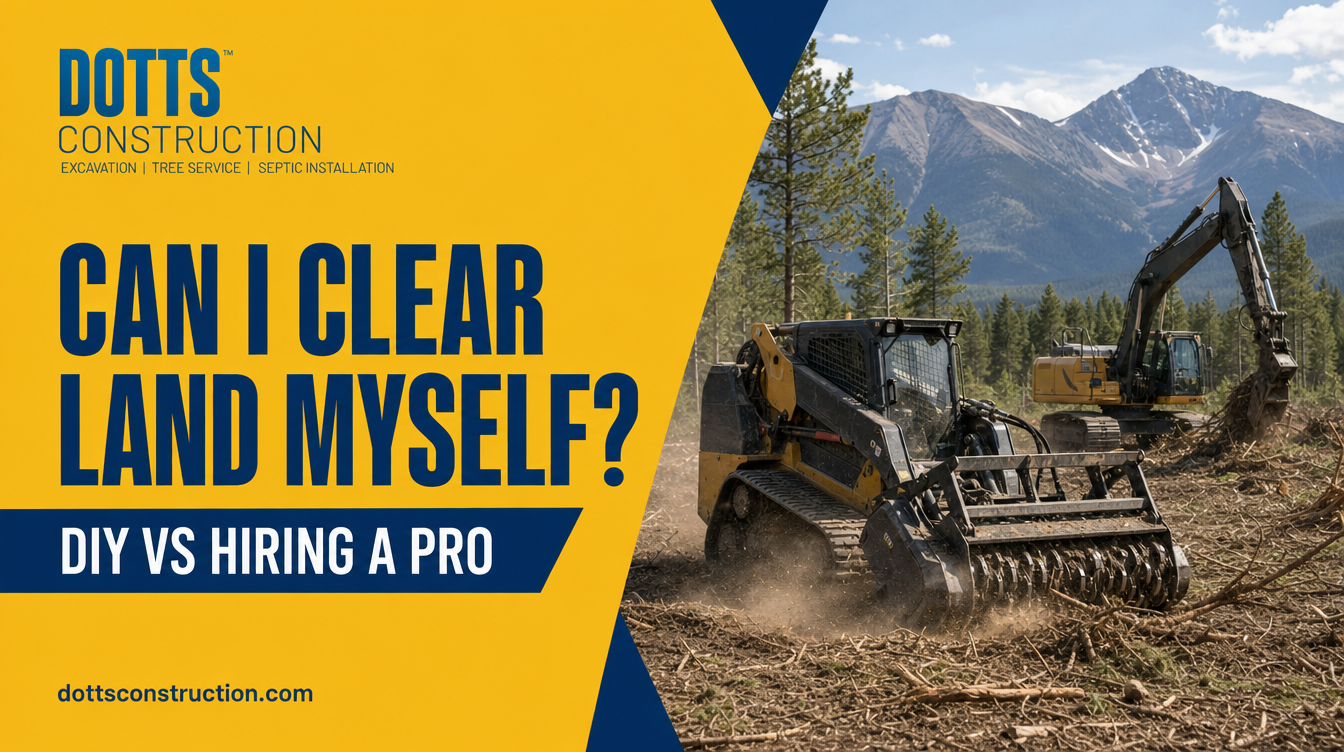
Thinking About Clearing Your Land Yourself?
Yes, you can clear land by yourself, but the honest answer is that "by yourself" means very different things depending on what's on your lot. For small lots with light brush, a motivated homeowner with rented equipment can clear a quarter-acre in 3 to 5 working days. For wooded acreage with large trees and deep root systems, DIY lot clearing without heavy machinery can stall a construction project for weeks.
Here's what this guide covers: every phase of the process, the real costs, the genuine dangers, and the point where professional lot clearing for a house stops being optional.
What Does "Lot Clearing for a House" Actually Involve?
Lot clearing for a house is the process of removing trees, brush, stumps, rocks, and other vegetation from a parcel of land so that it is ready for foundation excavation, grading, driveway installation, or septic system design. It is not just mowing or brushing. It is full-site preparation.
The scope of work breaks into four distinct phases:
- Planning and permitting (often skipped by DIYers, always costly when skipped)
- Brush and small tree removal
- Large tree felling and stump extraction
- Debris disposal and site cleanup
Each phase has its own equipment requirements, physical demands, and risk profile. Getting phase one wrong can stop the entire project at the permit stage.
What Permits Do You Need Before Clearing Land?
Most jurisdictions require at least one permit before any land disturbance begins. This is the step that surprises homeowners the most, and skipping it is one of the most expensive mistakes you can make on a lot clearing project.
Here is what to check before you pick up a single tool:
- Land disturbance or grading permits: Required in most counties for any clearing over 5,000 square feet. Some areas lower that threshold to 1 acre. Call your local building department first.
- Tree removal permits: Many municipalities protect trees over a certain trunk diameter (often 6 to 12 inches). Removing a protected tree without authorization can result in fines and mandatory replacement.
- Erosion and sediment control: If your lot drains toward a stream, wetland, or neighbor's property, you may need a stormwater plan before clearing.
- Wetlands delineation: The Army Corps of Engineers regulates any disturbance within 100 feet of wetlands. Clearing into a wetland buffer without permits can result in federal violations, not just local ones.
Pro Tip: Call 811 before any digging, grading, or stump pulling. This is the national U.S. utility notification number. It is free, it is required by law in most states, and it prevents you from cutting a gas line while renting an excavator for the weekend.
Also: walk your property boundaries before clearing a single branch. Hire a licensed surveyor if the corners are not clearly marked. Clearing a neighbor's tree is a civil dispute waiting to happen.
How Hard Is DIY Lot Clearing for a Small Homesite?
For a lot under half an acre with light to moderate brush and no significant tree cover, DIY lot clearing is genuinely achievable with rented equipment and a weekend of hard work. Here is a realistic breakdown:
Phase 1: Light Brush and Saplings
Tools needed: Chainsaw, loppers, brush axe, heavy-duty work gloves, chainsaw chaps, eye protection, hearing protection.
- Clear brush in rows, starting from the outside edges and working inward.
- Cut saplings (under 2 inches in diameter) at the base with loppers or a brush axe.
- Pile material as you go. Do not let debris scatter across the lot.
A walk-behind brush mower rented from an equipment dealer like Sunbelt Rentals or United Rentals runs $150 to $250 per day and handles weeds, saplings, and heavy grass up to about 2 inches in diameter very efficiently. An ATV-towed brush hog covers more ground faster if you have access to a tractor or ATV.
Phase 2: Trees Under 10 Inches in Diameter
These are workable for an experienced chainsaw operator. Use proper felling techniques: assess the lean, establish your escape path, make the undercut first, then the back cut.
Safety is non-negotiable here. According to the U.S. Bureau of Labor Statistics Occupational Injury data, tree felling is consistently one of the most dangerous trades in the country, with fatality rates exceeding 80 per 100,000 workers annually. That number exists because trees do not fall where inexperienced operators expect them to.
If any tree is near a structure, utility line, fence, or another large tree, hire a certified arborist or tree service. The risk is not worth the savings.
What Is the Hardest Part of Clearing Land Yourself?
Stump removal is the single most labor-intensive and equipment-intensive part of any lot clearing project. This is where most DIY homesite clearing projects either stall completely or blow the budget on rental equipment.
Your options for stumps:
| Method | Estimated Cost | Best For | Downside |
|---|---|---|---|
| Stump grinder rental | $175–$350/day | Stumps up to 24 inches, accessible ground | Slow, physically demanding, leaves root mat |
| Excavator/backhoe rental | $300–$600/day | Full stump and root ball extraction | Requires operator skill, damages soil structure |
| Hire a professional | Varies by site | Large stumps, rocky soil, multiple trees | Higher upfront cost, but faster and cleaner |
| Chemical stump remover | $10–$30 per stump | Very small, isolated stumps | Takes months, not practical for homesite prep |
Here's the thing: for a construction project, grinding a stump is often not enough. A stump grinder chews the visible stump down but leaves the root system 12 to 18 inches underground. When you excavate for a foundation or pour a driveway over those roots, they decay and create voids. That causes settling, cracking, and expensive repairs later.
For any lot intended for a house foundation, stumps need to be fully extracted, not just ground. That means an excavator or a track loader pulling root balls out of the ground. That is a professional-grade task.
DIY vs. Hiring a Pro: When Does It Stop Making Sense to Do It Yourself?
This is the question most homeowners ask after they realize how much work is actually involved. The honest answer comes down to four factors:
1. Lot Size
- Under 0.5 acres, light brush: DIY is viable.
- 0.5 to 2 acres, mixed vegetation: Rent heavy equipment or hire a crew for the tree and stump phase.
- Over 2 acres, wooded: Professional lot clearing is almost always faster and cheaper when you account for equipment rental, fuel, debris disposal, and your time.
2. Tree Density and Size
A lot with 10 to 15 mature hardwood trees (oak, hickory, walnut) is a different project than a lot with 200 young pines. Mature hardwoods have root systems that extend 2 to 3 times the canopy spread. A professional with an excavator and a brush rake clears what would take a homeowner two weeks in a single day.
3. Soil and Site Conditions
Rocky soil, high clay content, and low spots with standing water all complicate clearing. These are also the conditions that matter most for your foundation, driveway, and septic system. A professional land clearing crew identifies these problems during clearing. A DIYer often discovers them during foundation excavation, when fixing them costs far more.
4. Timeline
Every day your construction site is not ready is a day your project is delayed. If you are waiting on a builder or a concrete crew, an uncleared lot means a rescheduled start date, potential deposit forfeiture, and subcontractor rebooking costs.
Pro Tip: Get a professional quote before committing to full DIY. Many excavation companies will quote lot clearing by the acre or by the hour. The price gap between DIY and professional is smaller than most homeowners expect once equipment rental, fuel, dump fees, and labor hours are factored in.
How Do You Dispose of Debris After Clearing Land?
Debris disposal is the phase most DIY guides underestimate. You will generate more material than you expect, and local disposal rules vary significantly.
Your options:
- Burning: Legal in many rural jurisdictions with a burn permit. Check local ordinances first. Many areas restrict burning by season or proximity to structures.
- Wood chipper rental: Converts brush and small limbs into mulch you can use on-site for erosion control or walkways. Chipper rentals run $200 to $400 per day from dealers like Home Depot or Sunbelt Rentals.
- Dumpster rental: For mixed debris, rent a 30 to 40 cubic yard roll-off. Expect $400 to $700 per haul depending on your market.
- Log splitting: Marketable firewood from large hardwoods can offset costs. Some tree services will actually pay for access to high-value timber.
- Professional hauling: Included in most professional lot clearing quotes. This is often where professional service becomes a clear value.
What Are the Real Costs of DIY Lot Clearing?
Here is an honest cost comparison for clearing a half-acre wooded homesite:
| Cost Item | DIY Estimate | Notes |
|---|---|---|
| Chainsaw (rental or owned) | $50–$150/day | Safety gear adds $100–$200 if purchased |
| Brush mower rental | $150–$250/day | 1–2 days for half-acre |
| Excavator rental | $300–$600/day | 1–2 days for stumps and grading |
| Stump grinder rental | $175–$350/day | Optional if using excavator |
| Debris disposal (dumpster) | $400–$700 per haul | May need 2 hauls |
| Burn permit | $0–$50 | If burning is permitted locally |
| Total DIY estimate | $1,200–$2,500+ | Does not include your labor time |
Professional lot clearing for a house homesite typically runs $1,500 to $6,000 per acre depending on tree density, access, and regional market rates.
The gap narrows significantly once you add rental costs, fuel, dump fees, and 40 to 60 hours of physical labor.
What Happens After the Land Is Cleared?
Clearing is step one. Before construction can begin, your cleared lot typically needs:
- Grading and slope correction to manage drainage and create a stable building pad
- Foundation excavation for the home's footprint
- Driveway installation including base material, compaction, and drainage
- Septic system design and installation if municipal sewer is not available
Each of these steps builds directly on the quality of the clearing work. A lot that was cleared but not properly grubbed (stumps and root masses left underground) will create problems at every subsequent phase.
Frequently Asked Questions About DIY Lot Clearing
How long does it take to clear a half-acre lot by yourself?
For a half-acre lot with moderate brush and 5 to 10 small trees, expect 3 to 5 full working days with rented equipment. Wooded lots with large trees and stumps can take 10 or more days of sustained effort. Weather, soil conditions, and debris disposal logistics add time.
Can I rent an excavator with no experience to clear land?
You can rent one, but operating an excavator safely and effectively takes practice. Most rental companies require you to demonstrate basic competency. Using an excavator incorrectly on wooded land risks tipping the machine on uneven ground, damaging underground utilities, or creating erosion problems that cost more to fix than hiring a professional in the first place.
Do I need a permit to clear my own land?
In most jurisdictions, yes. Any land disturbance over a certain threshold (often 5,000 square feet or 1 acre) requires a grading or land disturbance permit. Tree removal may require a separate permit. Contact your local building department before any clearing begins to avoid fines and stop-work orders.
What is the cheapest way to clear land for a house?
The cheapest approach for light brush is hand clearing with a chainsaw and brush axe, followed by burning the debris where permitted. For wooded lots, renting a brush mower and excavator on the same day minimizes your per-day rental costs. Getting multiple quotes from professional crews is also worth it, as competitive pricing can be surprisingly close to full DIY cost.
Should I clear land before or after getting a building permit?
Get your building permit (or at minimum, submit your application) before major clearing begins. Some jurisdictions require approved site plans and erosion control measures before any grading or clearing. Starting without permits can result in a stop-work order that halts your project until inspections are completed and fines are paid.
What should I do with the stumps?
For a homesite, full stump extraction is the right answer, not just grinding. Ground stumps leave root masses underground that decay and cause soil settlement under foundations and driveways. Use an excavator to pull root balls completely, then backfill and compact properly.
How do I know if my lot has protected trees or wetlands?
Contact your local building department and your state's environmental agency. A wetlands delineation survey (performed by a licensed wetlands consultant) will identify regulated areas. Your county may also have GIS mapping tools online that show known wetland boundaries. Never assume cleared land is unregulated.
Ready to Get Your Homesite Cleared the Right Way? Here's Your Next Step.
DIY lot clearing for a house is absolutely possible for the right lot, the right person, and the right scope. But the most common outcome we see is a homeowner who starts clearing on their own, realizes halfway through that the stumps and root masses are beyond what rental equipment can handle efficiently, and ends up calling a professional anyway. At that point, they have already spent money on equipment rental and days of labor, and the site is partially cleared in a way that complicates the professional's work.
At Dotts Construction, we use the Dotts 3M Method to transform rough ground into fully prepared, construction-ready land. That means coordinated site clearing, excavation, grading, and septic system installation handled as a single project, not a patchwork of separate contractors who never talk to each other.
If you want a clear picture of what your specific lot needs and what it will cost before you make any decisions, the right move is a site assessment. We show up when we say we will, we explain every step, and we do not leave you guessing about what happens next.
Get a straight answer about your lot: Call Dotts Construction or schedule your site assessment at Request a free consultation or call (719) 280-4141.
Related Guides
Need the pros? See Land Clearing Services. More reading:
About the Author
Michael Dotts brings over 15 years of hands-on experience in heavy construction and grading, with a specialty in the unique demands of building in the Rocky Mountains, where steep terrain, rocky ground, and harsh weather change the rules most flatland contractors are used to. Because Michael knows what it really takes to get the job done right in Colorado’s high country, you can count on honest, accurate quotes that won’t creep up halfway through the job.