
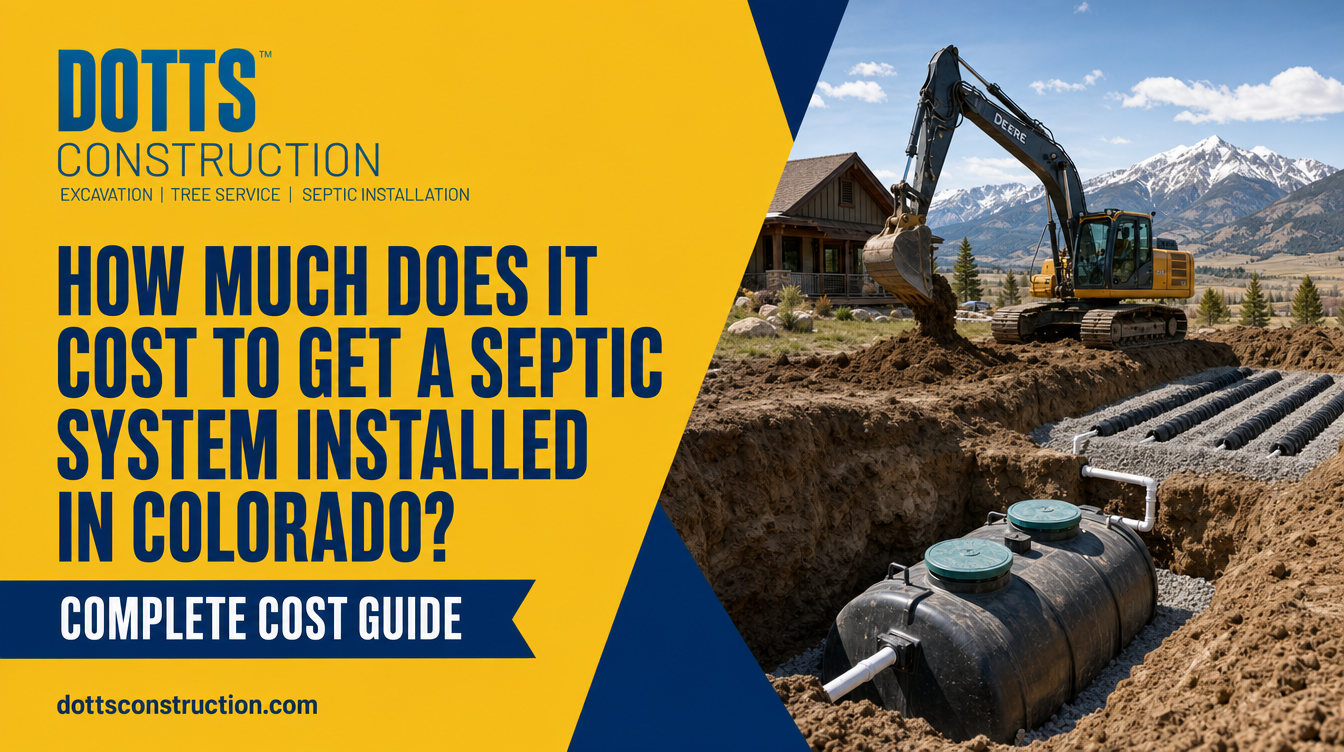
Planning a Septic System for Your Colorado Property?
Installation costs swing widely with your site, elevation, and county requirements, so here is a clear, current breakdown of what to actually expect to pay.
Colorado septic system installation costs range from $30,000 to $60,000 for most residential properties, with remote locations often pushing costs higher due to site access challenges and mandatory advanced treatment requirements under state regulations.
What Makes Colorado Septic Systems More Expensive?
Colorado's unique environmental regulations and challenging terrain drive higher septic installation costs compared to most states. The state requires advanced treatment systems or alternative installations for most new construction projects.
Colorado-specific cost factors include:
- Mandatory soil percolation testing ($1,000-$2,500)
- Required engineered system designs for challenging soil conditions
- Advanced treatment unit requirements in sensitive watersheds
- High-altitude installation challenges affecting system performance
- Rocky soil conditions requiring specialized excavation equipment
Standard septic systems are rarely approved in Colorado. Most installations require engineered solutions or mound systems, which automatically place your project in the $40,000-$80,000 range before considering site-specific complications.
What Are the Main Cost Components for Colorado Septic Installation?
Colorado septic installation breaks down into several distinct cost categories that homeowners need to budget for separately.
Site Evaluation and Permits
- Soil percolation test: $1,000-$2,500
- Site evaluation by certified professional: $1,500-$3,000
- State and county permits: $600-$1,500
- Engineered system design (required for most installations): $4,000-$9,000
System Components
- Advanced treatment unit: $16,000-$30,000
- Distribution box and piping: $3,000-$6,000
- Drain field construction: $10,000-$24,000
- Pumps and controls (if needed): $4,000-$8,000
Installation Labor
- Excavation and site preparation: $6,000-$16,000
- System installation and connection: $5,000-$10,000
- Final inspection and startup: $1,000-$2,000
Total typical range: $40,000-$80,000 for a standard 3-4 bedroom home installation.
How Do Site Conditions Affect Your Colorado Septic Costs?
Site conditions dramatically impact septic installation costs in Colorado. Remote properties face additional challenges that can push costs well beyond the standard range.
Challenging Site Factors
Rocky soil conditions require specialized excavation equipment, adding $4,000-$10,000 to standard installation costs. Many Colorado properties sit on decomposed granite or clay hardpan that resists conventional digging methods.
Steep slopes necessitate mound or pressure distribution systems, increasing costs by $10,000-$20,000 over conventional installations. These systems require additional pumping equipment and engineered design.
High groundwater levels force installers to use raised bed systems or advanced pumping solutions, adding $6,000-$16,000 to base costs.
Access and Utility Challenges
Limited site access for equipment delivery increases labor costs significantly. If excavators cannot reach the installation area directly, expect hand-digging premiums of $100-$150 per linear foot.
Electrical service requirements for pump systems cost $3,000-$7,000 if trenching and connection to the main panel is required.
Water well proximity regulations may force system relocation, adding engineering costs and potentially requiring more expensive advanced treatment solutions.
What Types of Septic Systems Are Required in Colorado?
Colorado regulations severely restrict conventional septic systems, requiring advanced treatment for most new installations.
| System Type | Typical Cost Range | Best For | Required When |
|---|---|---|---|
| Conventional gravity | $24,000-$36,000 | Ideal soil conditions only | Rarely approved |
| Mound system | $36,000-$60,000 | Poor soil drainage | Clay or rocky soil |
| Sand filter system | $44,000-$70,000 | High groundwater areas | Groundwater within 3 feet |
| Advanced treatment unit | $50,000-$80,000+ | Sensitive watersheds | Most Colorado locations |
| Engineered pressure system | $40,000-$70,000 | Steep slopes | Slopes over 15% |
Advanced treatment units dominate Colorado installations because state regulations prioritize groundwater protection and environmental compliance over installation costs.
How Do Remote Property Challenges Impact Costs?
Remote Colorado properties face unique septic installation challenges that substantially increase project costs beyond standard estimates.
Equipment Access Issues
Narrow or unpaved access roads prevent standard excavation equipment from reaching installation sites. This forces contractors to use smaller, less efficient equipment, increasing labor hours by 50-100%.
Distance from material suppliers adds delivery surcharges of $400-$1,000 per truckload for septic components, gravel, and other materials.
Seasonal access limitations in mountain areas restrict installation windows, creating scheduling pressure that can increase costs by 10-20% during peak construction periods.
Utility Infrastructure Gaps
No electrical service at remote sites requires trenching and connection costs of $4,000-$10,000 for pump system power requirements.
Poor cell coverage complicates system monitoring for advanced treatment units, potentially requiring hardwired alarm systems costing $1,500-$3,000.
Limited local contractor availability in remote areas often means paying travel time and mobilization fees of $1,000-$2,500 per service call.
Pro Tip: Budget an additional 25-40% above standard estimates for truly remote properties. The combination of access challenges, material delivery costs, and limited contractor availability compounds quickly.
What Financing Options Exist for Colorado Septic Installation?
Given the high costs involved, most Colorado homeowners need financing solutions for septic system installation projects.
Traditional Financing Approaches
Home equity loans offer the most cost-effective financing for septic projects, with rates typically 2-3 percentage points below personal loans. Most lenders approve septic installation as an eligible home improvement expense.
Personal loans provide faster approval but higher interest rates. Expect rates of 6-12% for qualified borrowers on unsecured personal loans for septic projects.
Contractor financing through septic installation companies often includes promotional rates but may carry higher long-term costs. Always compare contractor financing offers against bank alternatives.
Specialized Septic Financing Programs
USDA Rural Development grants provide up to $40,000 in septic system assistance for qualifying rural properties. Income restrictions apply, and applications require 60-90 days processing time.
County health department programs in some Colorado counties offer low-interest loans for septic repairs and replacements. Contact your local health department for availability.
Property tax assessment financing allows spreading septic costs over 10-20 years through increased property tax payments. Not all counties offer this option, but it provides the lowest effective interest rates when available.
How Can You Control Septic Installation Costs in Colorado?
Strategic planning and informed contractor selection significantly impact final septic installation costs in Colorado.
Pre-Installation Cost Control
Get comprehensive soil testing early to avoid surprises during installation. Spending $2,000-$3,000 upfront on thorough site evaluation prevents costly mid-project design changes.
Plan installation timing strategically. Avoid peak construction season (May-August) when contractor schedules are tight and material costs peak. Fall and early spring installations often cost 10-15% less.
Bundle excavation work with other site improvements if possible. Combining septic installation with driveway grading or foundation work reduces mobilization costs across projects.
Contractor Selection Strategy
Verify Colorado septic installer licensing before accepting bids. Unlicensed installers may offer lower prices but create expensive compliance issues during inspection.
Request detailed material specifications in all bids to ensure legitimate cost comparisons. Vague estimates often hide cost escalations during installation.
Choose contractors familiar with your specific area. Local expertise with soil conditions and permit requirements prevents costly delays and redesigns.
Note: The cheapest bid rarely delivers the best value in septic installation. Focus on contractors who communicate clearly, provide detailed timelines, and show up when promised.
What Should You Expect During the Installation Process?
Colorado septic installation follows a structured timeline with specific milestones and inspection requirements.
Phase 1: Site Evaluation and Design (2-4 weeks)
- Professional soil testing and percolation analysis
- Site survey and system design development
- Permit applications and approval process
- Final cost estimates based on engineered specifications
Phase 2: Excavation and Site Preparation (3-5 days)
- Utility location and marking
- Excavation of tank and drain field areas
- Gravel bed preparation and compaction
- Installation of distribution components
Phase 3: System Installation (2-3 days)
- Septic tank placement and leveling
- Advanced treatment unit connection and testing
- Distribution box and piping installation
- Electrical connections for pump systems
Phase 4: Final Testing and Inspection (1-2 days)
- System startup and performance testing
- County health department final inspection
- Operator training for advanced treatment systems
- Warranty documentation and maintenance scheduling
Total timeline: 4-8 weeks from initial site evaluation to final approval, depending on permit processing and weather conditions.
What Ongoing Costs Should You Budget For?
Colorado septic systems require regular maintenance and inspection beyond the initial installation investment.
Routine Maintenance Costs
Advanced treatment unit servicing: $400-$800 twice yearly for most systems. Colorado regulations require professional maintenance for advanced treatment units.
Septic tank pumping: $500-$800 every 3-5 years depending on household size and system type.
System inspections: $300-$500 annually for advanced treatment systems, required by most Colorado counties.
Long-Term Replacement Planning
Advanced treatment unit replacement: $16,000-$24,000 every 15-20 years for mechanical components.
Drain field rehabilitation: $10,000-$30,000 every 20-30 years depending on soil conditions and usage patterns.
Pump replacement: $1,500-$3,000 every 10-15 years for pressure distribution systems.
Budget $1,000-$1,500 annually for combined maintenance, inspection, and replacement reserve funding to avoid major unexpected expenses.
Frequently Asked Questions
How long does septic installation take in Colorado?
Complete septic installation in Colorado typically takes 4-8 weeks from initial site evaluation to final approval, including permit processing time and weather delays.
Can I install a septic system myself in Colorado?
Colorado requires licensed professionals for septic installation and does not permit owner-installed systems. DIY installation voids permits and creates liability issues.
What happens if my soil fails the percolation test?
Failed percolation tests require engineered solutions like mound systems or advanced treatment units, typically adding $10,000-$30,000 to installation costs.
Do I need special permits for remote property septic installation?
Remote properties follow the same permit requirements as standard installations, but may need additional approvals for access roads or utility connections.
How do I choose between different septic system types?
System selection depends on soil conditions, site constraints, and local regulations rather than personal preference. Your site evaluation determines the required system type.
What warranty should I expect on septic installation?
Professional installers typically provide 1-year warranties on installation labor and 5-10 year warranties on major system components like tanks and treatment units.
Can septic installation be financed through my construction loan?
Most construction loans include septic installation as an eligible expense, but verify coverage with your lender before finalizing system selection and contractor agreements.
How to Get Started with Your Colorado Septic Project
Ready to move forward with septic installation on your Colorado property? Start with professional site evaluation to understand your specific requirements and realistic cost expectations.
Contact Dotts Construction for comprehensive septic system design and installation services throughout Colorado. Our Dotts 3M Method ensures your project stays on schedule, on budget, and meets all state compliance requirements without surprises.
Schedule your site evaluation today: Request a free consultation or call (719) 280-4141
Call us directly for immediate project consultation and detailed cost estimates based on your specific property conditions.
Related Septic Guides
Planning a septic project? Start with our guide to Septic System Installation in Colorado, then explore:
- Cost to Install a 2,000-Gallon Septic Tank
- The Cheapest Way to Install a Septic Tank
- Septic Cost on a Remote Colorado Property
About the Author
Michael Dotts brings over 15 years of hands-on experience in heavy construction and grading, with a specialty in the unique demands of building in the Rocky Mountains, where steep terrain, rocky ground, and harsh weather change the rules most flatland contractors are used to. Because Michael knows what it really takes to get the job done right in Colorado’s high country, you can count on honest, accurate quotes that won’t creep up halfway through the job.