
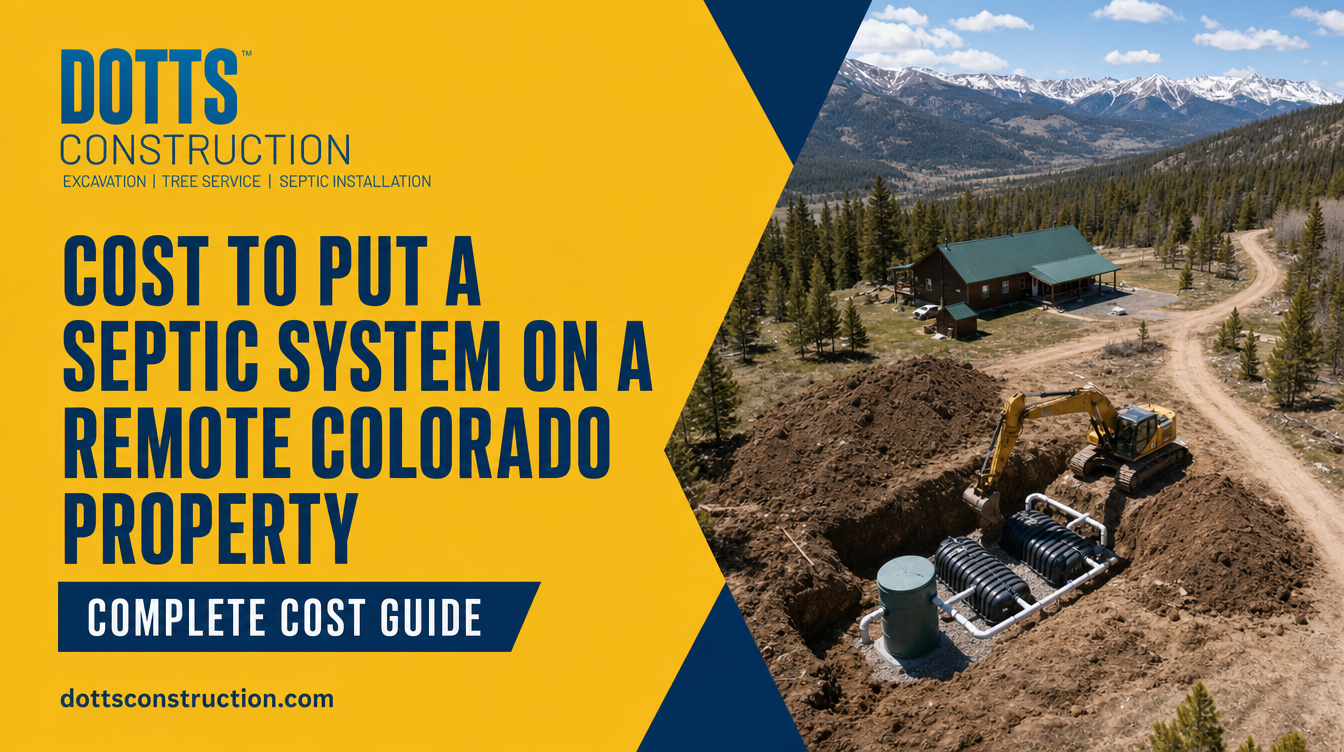
Installing a Septic System on a Remote Colorado Property?
Installing a septic system on a remote Colorado property typically costs between $24,000 to $70,000 with the average running around $40,000. Unlike standard residential installations that run $6,000-$20,000 remote properties face additional challenges including soil testing, access roads, permit complexities, and specialized excavation work that drive costs significantly higher.
What Makes Remote Property Septic Installation Different?
Remote septic installations in Colorado aren't your typical suburban project. Remote properties require engineering-grade soil analysis, custom system design, and specialized equipment access that standard installations don't face. We've completed dozens of these systems across Colorado's mountain regions, and the complexity always surprises new property owners.
The biggest cost driver isn't the septic tank itself but everything around it. Soil conditions, elevation changes, setback requirements from wells and property lines, and accessibility for equipment all factor into your final price.
Most contractors quote based on standard residential work. That's why you hear the $12,000 national average that doesn't apply to your situation. Remote installations involve custom engineering, not cookie-cutter solutions.
How Do Soil Conditions Affect Your Septic System Costs?
Colorado's diverse geology means soil testing becomes critical for remote properties. Soil percolation rates determine your entire system design and can increase costs by $10,000 to $30,000 for challenging conditions.
Standard percolation tests cost $1,000-$1,500 but remote properties often need multiple test sites. Rocky soil, high clay content, or poor drainage requires engineered solutions like mound systems or sand filters instead of conventional drain fields.
We've seen properties where initial soil tests looked promising, only to hit bedrock at four feet during excavation. That changes everything. Alternative systems cost more upfront but prevent the catastrophic failure you'd face trying to force a conventional system into unsuitable soil.
Pro Tip: Always budget an extra 20% for soil-related modifications. Colorado's mountain properties frequently surprise even experienced installers with underground conditions that don't match surface appearances.
Common Soil Challenges and Cost Impacts
- High clay content: Requires sand layer installation (+$6,000-$10,000)
- Rocky/shallow bedrock: May need mound system (+$16,000-$24,000)
- Poor drainage: Requires pump system and sand filter (+$12,000-$20,000)
- Steep slopes: Needs terracing and engineered retention (+$8,000-$16,000)
What Permits and Inspections Do You Need for Remote Colorado Properties?
Colorado requires septic permits at both county and state levels, with additional requirements for remote installations. Permit costs for remote properties typically run $3,000-$7,000 significantly higher than standard residential permits due to engineering review requirements.
Your installer needs to submit soil test results, system design plans, and environmental impact assessments. Remote properties often trigger additional review because of proximity to water sources or environmentally sensitive areas.
The permit process takes 6-12 weeks for remote installations versus 2-4 weeks for standard residential. Rush processing is available for an additional fee if your construction timeline demands it.
Counties like Jefferson, Boulder, and Clear Creek have specific requirements for high-altitude installations. Some require frost-protection measures that add $4,000-$8,000 to the basic system cost.
How Does Equipment Access Impact Installation Costs?
Equipment access represents 15-25% of total project costs for remote properties. Standard septic installations assume trucks and excavators can drive directly to the installation site. Remote properties rarely offer this luxury.
We've installed systems where equipment had to travel half a mile down unmaintained roads, cross temporary bridges, or navigate around mature trees that property owners wanted preserved. Each access challenge adds time and complexity to the project.
Some installations require smaller equipment that can navigate tight spaces, but smaller machines take longer to complete excavation work. Other properties need temporary road improvements to support heavy equipment weight.
Access-Related Cost Factors
- Road improvements: $4,000-$16,000 for temporary gravel or culvert installation
- Tree removal/trimming: $1,000-$6,000 depending on size and location
- Utility line relocation: $2,000-$10,000 if power/water lines block access
- Equipment transport: $1,000-$4,000 for specialized hauling to remote sites
What Are the Main Components and Their Costs?
Understanding septic system components helps you evaluate contractor quotes and spot potential issues before they become expensive problems.
| Component | Standard Cost | Remote Property Cost | Why the Difference |
|---|---|---|---|
| Septic Tank (1,000-1,500 gallons) | $2,500-$4,000 | $3,500-$7,000 | Transport, crane access |
| Distribution Box | $200-$400 | $300-$600 | Custom sizing often required |
| Drain Field Piping | $1,500-$3,000 | $2,500-$5,000 | Longer runs, elevation changes |
| Excavation Work | $5,000-$8,000 | $10,000-$20,000 | Access, soil conditions, depth |
| Backfill and Grading | $1,500-$2,500 | $3,000-$6,000 | Material transport, finish work |
The excavation work represents the biggest variable in remote installations. Standard residential jobs assume easy digging in prepared lots. Remote properties often involve ledge rock, tree root systems, or excavating around existing structures.
Tank transport becomes expensive when standard delivery trucks can't reach the installation site. Crane services or specialized hauling equipment adds $3,000-$8,000 to basic tank costs.
Alternative systems like lagoon systems or constructed wetlands cost $50,000-$90,000 but may be required for environmentally sensitive remote locations.
How Long Does Remote Property Installation Take?
Remote septic installations typically require 5-10 business days versus 2-3 days for standard residential systems. Weather conditions and seasonal access restrictions can extend this timeline significantly.
Spring installations often face mud season delays where equipment can't safely access properties. Winter installations in mountain areas may be impossible depending on elevation and snow conditions.
The permit approval process adds 6-12 weeks before installation can begin. Factor this into your overall construction timeline, especially if other work depends on completed septic systems.
Smart property owners start the permit process in late fall for spring installation, avoiding the spring rush when contractors and permit offices are overwhelmed with requests.
Note: Some remote properties require phased installation where access roads are improved first, then septic installation occurs in a second phase after road settling.
What Maintenance Costs Should You Budget Long-Term?
Remote properties face higher maintenance costs because service access is more difficult and expensive. Remote septic systems require pumping every 2-3 years at costs of $800-$1,500 versus $500-$800 for accessible systems.
Pump trucks charge mileage and access fees for remote properties. Some locations require smaller pump trucks that make multiple trips, increasing total service costs.
Annual inspection costs run $300-$600 for remote systems. Many contractors charge travel time for remote property visits, making routine maintenance more expensive than suburban properties.
Budget $1,000-$1,500 annually for remote system maintenance including pumping, inspection, and minor repairs. This prevents small issues from becoming major system failures that could cost $30,000+ to rebuild.
Long-Term Cost Planning
- Annual inspection: $300-$600
- Pumping (every 2-3 years): $800-$1,500
- Minor repairs: $400-$1,000 annually
- Major component replacement: $6,000-$16,000 (every 15-20 years)
What Should You Look for in a Remote Property Septic Contractor?
Choose contractors with specific experience in remote Colorado installations, not just residential septic work. Remote projects require different equipment, planning approaches, and problem-solving skills than standard residential jobs.
Ask potential contractors for references from recent remote installations in your county. Soil conditions and permit requirements vary significantly across Colorado counties, and local experience matters.
Verify contractors carry appropriate insurance for remote work including equipment transport and environmental liability coverage. Standard residential contractors may not have adequate coverage for complex remote installations.
The Dotts 3M Method ensures thorough site evaluation, meticulous planning, and methodical execution that prevents the costly mistakes common in remote septic installations. We communicate every step of the process and show up when promised, eliminating the contractor drama that derails construction timelines.
Why Do Remote Properties Cost More Than Standard Estimates?
Standard septic cost estimates assume suburban conditions that don't exist on remote properties. Remote installations face unique engineering challenges that increase costs by 100-300% over standard residential systems.
Here's what standard estimates miss:
Access road requirements often need engineering to support heavy equipment. Soil conditions vary dramatically across small areas, requiring multiple test sites and custom system design. Environmental setbacks from wells, streams, or wetlands may force alternative system designs.
Elevation changes require pump systems and pressure distribution that standard gravity-fed systems don't need. Material transport costs multiply when delivery trucks can't reach installation sites.
Most importantly, remote properties can't use cookie-cutter designs. Each installation requires custom engineering to work with specific site conditions, and custom work always costs more than standard solutions.
Pro Tip: Budget based on the high end of cost ranges for remote properties. It's easier to handle leftover funds than to scramble for additional financing when installation hits unexpected challenges.
How Can You Reduce Remote Septic Installation Costs?
Smart planning reduces costs without compromising system quality. Site preparation work completed by property owners can save $4,000-$10,000 in contractor charges.
Clear access routes for equipment before contractors arrive. Remove brush, small trees, and obstacles that slow equipment movement. Level and compact areas where trucks will park or turn around.
Schedule installation during optimal weather windows. Spring and fall offer better working conditions than summer heat or winter complications. Contractors often offer better pricing during slower winter months for spring installation scheduling.
Group septic installation with other excavation work like foundation preparation or driveway installation. Mobilizing equipment once for multiple projects reduces per-project costs significantly.
Consider system design options that work with your site instead of fighting against it. Sometimes a slightly different location reduces excavation costs by $10,000+ even if it requires longer utility runs.
Cost Reduction Strategies
- Site preparation: Clear access routes and work areas yourself
- Seasonal timing: Schedule during contractor's slower periods
- Project coordination: Combine with other excavation work
- Flexible design: Work with site conditions rather than against them
- Upfront planning: Complete soil testing and permits before construction season
What Questions Should You Ask Potential Contractors?
Ask specific questions that reveal contractor experience with remote installations versus general septic work.
"How many remote property septic systems have you installed in your county in the past two years?" Look for contractors with specific local experience, not just general septic work.
"What's your process for handling access challenges?" Experienced contractors have equipment and techniques for difficult access situations.
"Can you provide references from recent remote installations?" Contact previous customers about project timeline, cost accuracy, and problem-solving when unexpected issues arose.
"What warranties do you provide on remote installations?" Remote work should include longer warranty periods because of the complexity involved.
"How do you handle permits and inspections?" Contractors should guide you through the permit process and coordinate required inspections.
When Should You Start the Installation Process?
Begin permit applications 4-6 months before your target installation date. Remote property permits take longer and may require multiple revisions based on environmental reviews.
Colorado's construction season runs roughly April through October, depending on elevation. Schedule installation for late spring or early fall when weather conditions are optimal but contractors aren't overwhelmed with emergency repairs.
Soil testing should occur during dry conditions when equipment can access your property easily. Wet spring conditions can prevent soil testing equipment from reaching remote sites.
Coordinate septic installation timing with other construction phases. Foundation work, well drilling, and driveway installation all interact with septic system placement and should be planned together.
Start contractor interviews in winter for spring installation. Quality contractors book months in advance, especially for remote properties that require specialized planning.
Frequently Asked Questions
How much does soil testing cost for remote properties?
Soil testing for remote Colorado properties costs $1,500-$3,000 including multiple test sites and percolation analysis. Remote sites often require additional testing locations because soil conditions vary significantly across the property.
Can I install a septic system myself on remote property?
Colorado requires licensed contractors for septic installations and homeowner self-installation isn't permitted. The engineering complexity and permit requirements make professional installation mandatory for remote properties.
What size septic tank do I need for remote property?
Remote properties typically require 1,000-1,500 gallon tanks depending on home size and occupancy. Larger tanks reduce pumping frequency, which is important given higher service costs for remote locations.
How do winter conditions affect installation timing?
Winter installations above 7,000 feet elevation are generally not possible due to frozen ground and equipment access issues. Plan installation for April through October depending on your specific elevation and location.
What happens if soil conditions are worse than expected?
Poor soil conditions require alternative system designs like mound systems or sand filters that add $16,000-$30,000 to basic installation costs. Always budget contingency funds for soil-related modifications.
Do remote properties need special system designs?
Many remote properties require pump systems, larger tanks, or alternative drain field designs based on soil conditions and elevation changes. Custom engineering ensures system performance in challenging conditions.
How often do remote septic systems need maintenance?
Remote systems require pumping every 2-3 years and annual inspections. Higher maintenance frequency compensates for more difficult service access and prevents major system failures.
What Should You Do Next?
Don't let septic installation uncertainty derail your remote property construction project. Contact Dotts Construction for a thorough site evaluation and accurate cost estimate based on your specific property conditions. Our Dotts 3M Method ensures proper planning, clear communication, and on-time completion that keeps your construction timeline on track.
We'll handle permit applications, coordinate soil testing, and design a system that works with your property's unique challenges. No vague estimates or surprise costs – just straight answers and reliable execution that gets your site ready for construction.
Call us today to schedule your remote property septic consultation and get your project moving forward. Request a free consultation or call (719) 280-4141
Related Septic Guides
Planning a septic project? Start with our guide to Septic System Installation in Colorado, then explore:
- The Most Expensive Part of a Septic System
- What If You Can’t Afford a New Septic System
- The Most Reliable Mountain Septic System
About the Author
Michael Dotts brings over 15 years of hands-on experience in heavy construction and grading, with a specialty in the unique demands of building in the Rocky Mountains, where steep terrain, rocky ground, and harsh weather change the rules most flatland contractors are used to. Because Michael knows what it really takes to get the job done right in Colorado’s high country, you can count on honest, accurate quotes that won’t creep up halfway through the job.