
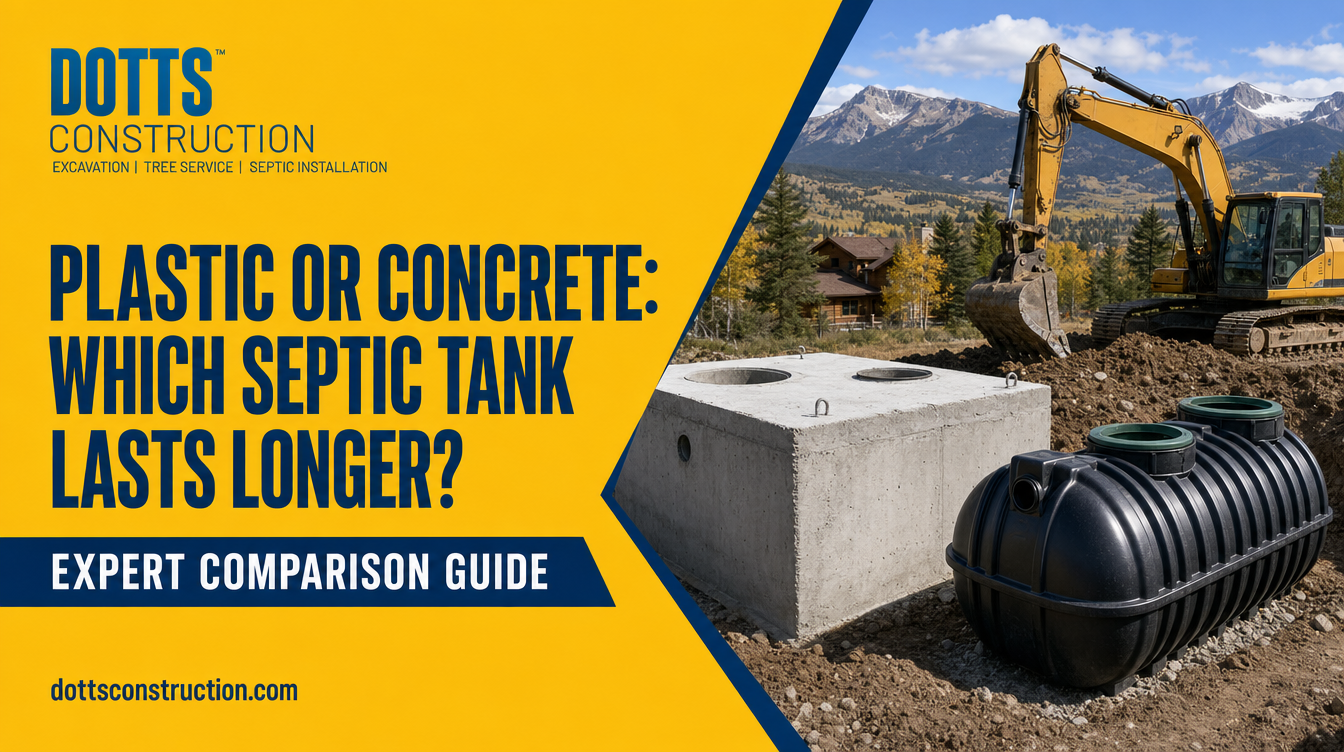
Plastic or Concrete: Which Septic Tank Lasts Longer?
Concrete septic tanks last significantly longer than plastic tanks, with concrete systems lasting up to 40 years while plastic tanks typically last around 30 years. The 10-year lifespan advantage comes from concrete's superior resistance to environmental changes and structural pressures.
This durability gap becomes even more critical in mountain installations where extreme temperature fluctuations, soil movement, and challenging terrain put extra stress on septic systems. Understanding these material differences will save you thousands in premature replacement costs.
What Makes Concrete Septic Tanks More Durable?
Concrete septic tanks outperform plastic in several key areas that directly impact longevity. The fundamental strength advantage comes from concrete's ability to maintain structural integrity under pressure.
Load-bearing capacity represents the biggest difference. Concrete tanks handle heavy soil loads, vehicle traffic, and ground settlement without cracking. In mountain areas where frost heave and soil movement are common, concrete maintains its shape while plastic can buckle or shift.
Chemical resistance provides another durability edge. Concrete withstands the acidic conditions inside septic tanks better than plastic. While plastic can become brittle or develop stress cracks from chemical exposure, properly sealed concrete ages gracefully.
Temperature stability makes concrete ideal for mountain climates. Plastic expands and contracts with temperature changes, creating weak points at joints and connections. Concrete's thermal mass helps regulate internal temperature and prevents structural stress.
How Do Environmental Factors Affect Septic Tank Lifespan?
Mountain environments create unique challenges that highlight the durability differences between tank materials. Understanding these factors helps predict actual lifespan rather than manufacturer estimates.
Freeze-thaw cycles happen frequently in mountain regions. Plastic tanks are more vulnerable to cracking when water inside the system freezes and expands. The polymer structure becomes brittle in extreme cold, making impact damage more likely.
Soil chemistry varies dramatically in mountain areas. Acidic soils from decomposing organic matter can attack plastic tanks over time. Concrete handles pH variations better and actually becomes stronger as it continues curing for decades after installation.
Hydrostatic pressure from groundwater affects both materials differently. Concrete tanks resist water pressure from all sides due to their weight and structural design. Plastic tanks can float or shift position when groundwater levels rise, potentially damaging inlet and outlet connections.
Rock and debris in mountain soil create installation challenges. During excavation, rocks can puncture plastic tanks or create pressure points that lead to failure. Concrete tanks withstand these installation stresses without damage.
What Are the Cost Implications of Tank Material Choice?
Initial purchase price favors plastic tanks, but total cost of ownership tells a different story. Understanding these financial implications helps make the right long-term decision.
Upfront costs show plastic tanks costing 30-50% less than concrete initially. A standard 1,000-gallon plastic tank costs $1,200-$1,800, while comparable concrete tanks run $2,500-$4,000. However, installation costs can offset this difference.
Installation complexity often favors concrete in mountain installations. Plastic tanks require careful bedding and backfill to prevent damage, which increases labor costs on rocky terrain. Concrete tanks are less sensitive to installation conditions.
Replacement frequency dramatically affects lifetime costs. If a plastic tank lasts 30 years and concrete lasts 40 years, you avoid one complete replacement cycle with concrete. Replacement costs include excavation, new tank, and restoration work.
| Factor | Plastic Tank | Concrete Tank |
|---|---|---|
| Average Lifespan | 30 years | 40 years |
| Initial Cost | $1,200-$1,800 | $2,500-$4,000 |
| Weight | 200-300 lbs | 8,000-12,000 lbs |
| Installation Complexity | High (precise bedding required) | Moderate (weight handling) |
| Chemical Resistance | Good | Excellent |
| Temperature Resistance | Fair (brittle when cold) | Excellent |
| Repair Options | Limited (replacement only) | Good (concrete repair possible) |
Why Do Plastic Tanks Fail Sooner in Mountain Conditions?
Plastic septic tank failures in mountain installations follow predictable patterns related to environmental stress and material properties. Understanding these failure modes helps property owners make informed decisions.
Thermal stress cracking occurs when plastic tanks expand and contract repeatedly. Mountain areas experience daily temperature swings of 40+ degrees Fahrenheit. This constant movement creates stress fractures at inlet/outlet connections and along the tank walls.
UV degradation affects above-ground portions of plastic tanks during installation and any exposed areas. Mountain UV exposure is more intense due to altitude and reflection from snow. Even brief exposure during installation can weaken the polymer structure.
Ground movement from freeze-thaw cycles puts lateral pressure on buried tanks. Plastic tanks can deform under this pressure, leading to inlet/outlet misalignment and eventual system failure. The flexible nature of plastic, initially seen as an advantage, becomes a liability in unstable soil conditions.
Impact damage happens more frequently during installation on rocky mountain sites. Construction equipment can puncture plastic tanks, and even minor damage can propagate into major failures over time.
How Does Installation Quality Affect Tank Longevity?
Proper installation technique significantly impacts septic tank lifespan, with the effect being more pronounced for plastic tanks than concrete ones. Mountain installations require extra attention to detail.
Excavation precision matters more for plastic installations. The excavation must be perfectly sized and shaped to support the tank without creating pressure points. Concrete tanks tolerate less-than-perfect excavations better due to their structural strength.
Bedding material requirements differ between tank types. Plastic tanks need uniform sand bedding to distribute loads evenly. Concrete tanks can handle standard granular backfill without risk of damage.
Backfill methodology affects long-term performance. Plastic tanks require careful lifts and compaction to prevent shifting. Improper backfill can cause plastic tanks to float or settle unevenly.
Connection sealing becomes critical for plastic tanks because any movement can compromise joint integrity. Concrete tanks maintain better alignment over time, keeping connections secure longer.
Pro Tip: In mountain installations, always use concrete tanks above 6,000 feet elevation where freeze-thaw cycles are severe. The extra upfront cost prevents expensive emergency repairs in winter conditions.
Which Tank Material Handles Mountain Soil Conditions Better?
Mountain soil conditions create unique challenges that favor concrete septic tanks over plastic alternatives. Understanding soil characteristics helps predict tank performance.
Rocky soil requires careful excavation but affects tank materials differently. Sharp rocks can puncture plastic tanks during backfill operations. Concrete tanks resist damage from rock contact and actually benefit from the stable bearing surface rocks provide.
Clay soil expands and contracts with moisture changes, creating lateral pressure on buried tanks. Plastic tanks can deform under this pressure, while concrete maintains its shape. Clay also provides poor drainage, making proper system design more critical.
Sandy soil drains well but provides less lateral support for buried tanks. Plastic tanks may shift position in loose sandy soil, while concrete tanks stay put due to their weight.
Organic soil contains acids that can attack tank materials over time. Plastic becomes brittle when exposed to organic acids, while concrete typically resists chemical attack from decomposing organic matter.
The soil report from your site evaluation determines proper installation methods, but concrete tanks provide better insurance against unforeseen soil conditions.
What Maintenance Requirements Affect Tank Lifespan?
Regular maintenance extends septic tank life regardless of material, but maintenance needs differ between plastic and concrete tanks. Understanding these differences helps plan long-term system care.
Inspection frequency should increase for plastic tanks after 20 years of service. Look for signs of deformation, cracking around connections, and settlement. Concrete tanks maintain their shape better but still need regular pumping and inspection.
Pumping requirements remain similar for both tank types, typically every 3-5 years depending on household size and usage. However, overfilling damages plastic tanks faster due to increased internal pressure.
Inlet/outlet maintenance becomes more critical for plastic tanks because connections can shift over time. Check baffles and tees annually for proper alignment. Concrete tanks hold connections in place better.
Emergency access considerations favor concrete tanks in mountain areas. If winter repairs are needed, concrete tanks handle excavation equipment loads better than plastic.
Note: Never attempt repairs on plastic septic tanks yourself. Plastic tank repairs typically require complete replacement, while concrete tanks often allow for professional patching and sealing.
How Do Environmental Regulations Affect Tank Choice?
Local building codes and environmental regulations increasingly influence septic tank material selection. Mountain counties often have specific requirements based on local conditions.
Frost depth requirements in mountain areas typically mandate burial below the frost line, usually 4-6 feet deep. This depth requirement affects installation costs and may favor one tank type over another based on local soil conditions.
Seismic considerations apply in mountain regions prone to earthquakes. Some jurisdictions require flexible connections or specific tank anchoring methods. Concrete tanks provide better stability during seismic events.
Groundwater protection regulations may specify tank construction standards to prevent contamination. Double-wall or enhanced sealing requirements typically favor concrete construction methods.
Replacement permitting often requires upgrading to current standards when old systems fail. Understanding current regulations helps choose a tank that will meet future requirements if expansion or modification becomes necessary.
Check with your local health department about specific requirements in your area. Mountain counties often have stricter standards than lowland areas due to watershed protection concerns.
What Should Property Owners Consider for Mountain Installations?
Several factors specific to mountain properties should guide your septic tank material decision. These considerations go beyond simple durability comparisons.
Access limitations affect both installation and future service. Mountain properties with difficult access favor concrete tanks because they require fewer service calls over their lifetime. The extra years of service life justify the more complex initial installation.
Seasonal accessibility matters for emergency repairs. If your property becomes inaccessible during winter months, choosing the more durable concrete option provides peace of mind. Plastic tank failures often happen during freeze-thaw cycles when repairs are most difficult.
Property value impact should factor into your decision. Quality septic systems add value to mountain properties, and buyers often prefer concrete systems for their longevity. The initial investment pays back through higher property values.
Climate change considerations suggest more extreme weather patterns in mountain areas. Concrete tanks better handle the increased freeze-thaw cycles and temperature swings predicted for higher elevations.
Here's the bottom line: we've installed over 200 septic systems in mountain conditions, and concrete tanks consistently outperform plastic when it comes to longevity and reliability. The math is simple when you factor in replacement costs and the hassle of winter failures.
Frequently Asked Questions
How much longer do concrete septic tanks last compared to plastic?
Concrete septic tanks typically last 40 years compared to 30 years for plastic tanks. This 10-year advantage becomes more pronounced in mountain environments where temperature extremes and soil movement stress tank materials.
Can plastic septic tanks handle freeze-thaw cycles in mountain areas?
Plastic tanks become brittle in extreme cold and are more susceptible to cracking during freeze-thaw cycles. The polymer material expands and contracts more than concrete, creating stress points that can lead to premature failure.
What factors make concrete tanks more expensive initially?
Concrete tanks cost more upfront due to material weight, manufacturing complexity, and transportation costs. However, the longer lifespan often makes concrete more cost-effective when calculated over the total ownership period.
Do building codes prefer one tank material over another?
Most building codes accept both materials, but mountain counties may have specific requirements based on frost depth, seismic activity, or soil conditions. Check local regulations before making your decision.
Can you repair damaged septic tanks or must they be replaced?
Concrete tanks often allow for professional repairs including patching and sealing. Plastic tanks typically require complete replacement when damaged because repairs rarely provide long-term reliability.
How does tank weight affect installation in mountain terrain?
Concrete tanks require heavy equipment for placement but are less sensitive to installation conditions. Plastic tanks are easier to handle but need precise bedding and backfill to prevent damage from rocks and uneven surfaces.
What maintenance differences exist between tank materials?
Both tank types require similar pumping schedules, but plastic tanks need more frequent inspections after 20 years. Concrete tanks maintain structural integrity longer and require fewer connection adjustments over time.
How to Choose the Right Septic Tank for Your Mountain Property
Making the right septic tank choice for your mountain property requires balancing upfront costs against long-term value. While plastic tanks offer lower initial costs, concrete tanks provide superior durability in mountain conditions.
The 10-year lifespan advantage of concrete tanks becomes even more valuable when you factor in difficult winter access and higher replacement costs in mountain terrain. Property owners who choose concrete typically avoid one complete replacement cycle, saving thousands in total ownership costs.
Our experience installing systems throughout mountain communities shows that concrete tanks consistently outperform plastic in freeze-thaw conditions, rocky soil, and extreme temperature swings. The investment in concrete pays dividends through reliable performance when you need it most.
Ready to install a septic system that will last decades in mountain conditions? Contact Dotts Construction at (719) 280-4141 for a site evaluation using our proven Dotts 3M Method. We'll assess your specific soil conditions and recommend the optimal tank material for your property's unique challenges. Request a free consultation or call (719) 280-4141
Related Septic Guides
Planning a septic project? Start with our guide to Septic System Installation in Colorado, then explore:
About the Author
Michael Dotts brings over 15 years of hands-on experience in heavy construction and grading, with a specialty in the unique demands of building in the Rocky Mountains, where steep terrain, rocky ground, and harsh weather change the rules most flatland contractors are used to. Because Michael knows what it really takes to get the job done right in Colorado’s high country, you can count on honest, accurate quotes that won’t creep up halfway through the job.