
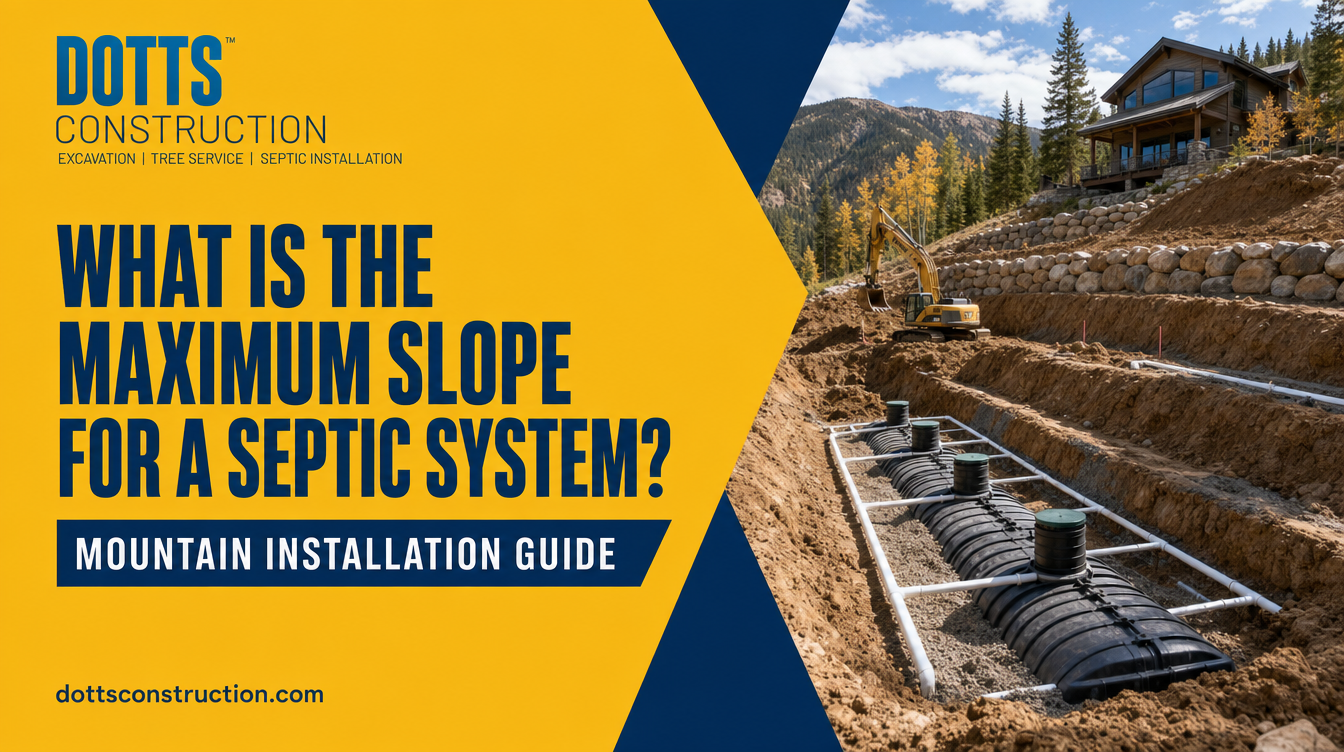
Building on a Steep Mountain Lot?
The maximum slope for a septic system installation is typically 30% (or 17 degrees), but mountain installations often require custom engineering solutions when natural terrain exceeds this limit. Proper grading and specialized excavation techniques can overcome challenging mountain topography while ensuring your system meets local health codes.
Mountain properties present unique challenges that require careful planning and expert execution to achieve code-compliant septic installations.
Why Does Slope Matter for Mountain Septic Systems?
Septic systems rely on gravity flow and proper drainage to function correctly. When slopes are too steep, several critical issues emerge:
Hydraulic problems occur when effluent flows too quickly through the system. The wastewater doesn't have adequate contact time in the treatment processes, reducing overall system effectiveness.
Soil erosion becomes a major concern on steep grades. Mountain soils are already susceptible to erosion, and improper septic installation can accelerate this process, potentially destabilizing your entire system.
Excavation safety requires specialized equipment and techniques on steep terrain. Standard excavation methods used in flat areas simply don't work on mountain slopes exceeding 20%.
We've seen countless mountain properties where inexperienced contractors attempted installations on overly steep slopes without proper site preparation, resulting in system failures within the first few years.
What Are the Official Grade Requirements?
The Uniform Plumbing Code and most local health departments establish these slope limits for septic systems:
- Distribution boxes: Maximum 2% slope (approximately 1/4 inch per foot)
- Drainfield lines: Between 0.5% and 3% slope
- Supply lines to tank: 1% to 3% slope
- Overall site grade: Should not exceed 30% without engineered solutions
Mountain-specific considerations often require variances from these standard requirements. Local health departments in mountainous regions typically have additional regulations addressing steep terrain challenges.
According to the National Association of Wastewater Technicians, approximately 40% of mountain septic installations require some form of grade modification to meet code requirements.
How Do You Install Septic Systems on Steep Mountain Terrain?
Installing septic systems on challenging mountain slopes requires the Dotts 3M Method: strategic site modification, engineered grading solutions, and meticulous drainage control.
Cut and Fill Excavation Technique
Step 1: Site Analysis
- Survey the natural grade and identify optimal system placement
- Locate areas where minimal excavation achieves proper slopes
- Plan drainage routes that work with natural water flow patterns
Step 2: Strategic Excavation
- Cut into the hillside to create level platforms for tank placement
- Use excavated material to build up areas for proper drainfield grading
- Install retaining walls where necessary to prevent soil movement
Step 3: Drainage Management
- Install French drains above the system to divert surface water
- Create proper slopes for effluent distribution throughout the drainfield
- Ensure adequate separation from groundwater and rock formations
Specialized Equipment Requirements
Mountain septic installation demands equipment capable of working on steep grades safely:
- Track excavators provide better stability than wheeled equipment on slopes
- Compact track loaders can navigate tight mountain access roads
- Laser level systems ensure precise grading on challenging terrain
What Soil Challenges Affect Mountain Septic Systems?
Mountain soils present unique characteristics that directly impact septic system design and installation success.
Rocky and Shallow Soils
Bedrock proximity is common in mountain environments. Most septic codes require minimum 2-4 feet of soil above bedrock, which may not exist naturally on your site.
Solution approach: We often need to import suitable soil material or design raised bed systems that create adequate treatment depth above rock formations.
High Clay Content
Percolation problems arise when mountain soils contain excessive clay. These soils don't allow proper effluent absorption, causing system backups and surface breakouts.
Professional testing determines soil percolation rates through standardized perc tests. Soils with rates slower than 1 inch per hour typically require engineered solutions like sand filters or advanced treatment units.
Seasonal Water Table Issues
Snowmelt conditions create temporarily high water tables that can interfere with septic system operation during spring months.
Frost penetration in mountain climates can freeze septic lines if not properly insulated and buried below frost line depths, which may exceed 4 feet in some mountain regions.
How Much Does Mountain Septic Installation Cost?
Mountain septic system costs reflect the additional complexity and specialized work required for steep terrain installations.
| Cost Factor | Flat Terrain | Mountain Installation |
|---|---|---|
| Basic System | $3,000-$5,000 | $5,000-$8,000 |
| Excavation | $1,500-$2,500 | $3,000-$5,000 |
| Engineered Design | $0-$500 | $1,500-$3,000 |
| Soil Import | $0-$1,000 | $2,000-$4,000 |
| Access Road Work | $0-$500 | $1,000-$3,000 |
| Total Range | $4,500-$8,500 | $12,500-$23,000 |
Additional factors that increase mountain installation costs include:
- Permit complexity: Mountain installations often require engineered plans and multiple agency approvals
- Equipment mobilization: Getting heavy machinery to remote mountain sites adds significant transport costs
- Weather delays: Mountain weather can shut down excavation work for extended periods
- Rock removal: Blasting or hydraulic breaking may be necessary for bedrock removal
The investment in professional mountain septic installation pays off through decades of reliable system operation and avoided replacement costs.
What Permits Do You Need for Mountain Septic Systems?
Mountain septic installations typically require multiple permits and approvals beyond standard flat-terrain requirements.
Health Department Permits
Standard septic permits cover system design, installation oversight, and final inspections. Mountain installations often require additional engineering stamps and soil analysis reports.
Variance applications may be necessary when standard code requirements cannot be met due to site constraints. These applications require detailed engineering justifications and often involve public hearings.
Environmental Permits
Soil disturbance permits are required in many mountain counties for excavation projects exceeding certain square footage thresholds.
Erosion control plans must be submitted showing how you'll prevent soil loss during and after construction. Mountain sites with slopes over 15% typically require engineered erosion control measures.
Building Department Reviews
Structural considerations come into play when septic installations require retaining walls or significant cut-and-fill operations near structures.
Access road permits may be needed if heavy equipment requires temporary road improvements to reach your installation site.
Here's the thing about mountain permits: starting the application process early saves months of delays. We've seen projects held up for entire construction seasons because owners didn't realize the permit complexity involved.
When Should You Call a Professional?
Mountain septic installation should always involve professional expertise, but certain site conditions absolutely require specialized contractors.
Mandatory Professional Situations
Slopes exceeding 20% require specialized excavation techniques and equipment that most general contractors don't possess. Attempting DIY installation on steep grades creates safety hazards and code violations.
Rock or hardpan encountered during initial site evaluation indicates the need for specialized breaking or removal techniques. Standard excavation equipment cannot handle these conditions safely or efficiently.
Previous system failures on the same site suggest underlying soil or drainage issues that require professional diagnosis and engineered solutions.
Dotts Construction Advantage
Our Dotts 3M Method addresses the three critical elements of successful mountain septic installation:
- Meticulous site preparation that works with natural terrain features
- Modern equipment designed for steep-grade excavation safety
- Methodical installation following engineered specifications precisely
Communication every step means you know exactly what's happening with your project and when. No surprises, no delays, no wondering if your contractor will show up when promised.
We've completed over 100 mountain septic installations across all of rural and hard-to-access Colorado, transforming challenging terrain into code-compliant systems that operate reliably for decades.
FAQ: Mountain Septic System Installation
Can you install a septic system on any slope?
No, septic systems cannot be installed on slopes exceeding 30% without significant site modification and engineering. Most installations require grading work to achieve proper slopes for system components.
How deep do septic systems need to be in mountains?
Mountain septic systems typically require burial depths of 4-6 feet to stay below frost line and provide adequate soil treatment. Rocky terrain may require imported soil to achieve proper depths.
What happens if my mountain soil won't perc?
Poor percolation soils require engineered solutions like sand filter systems, raised bed installations, or advanced treatment units with surface discharge capabilities approved by local health departments.
How long does mountain septic installation take?
Mountain installations typically require 5-10 days compared to 2-3 days for flat terrain, depending on excavation complexity, weather conditions, and permit inspection schedules.
Do mountain septic systems need special maintenance?
Yes, mountain systems benefit from annual inspections focusing on erosion control, surface water diversion, and pump system operation if the installation includes lift stations or distribution pumps.
Can I install a septic system in winter in the mountains?
Winter installation is possible but challenging due to frozen ground conditions and equipment access limitations. Most contractors recommend spring or summer installation when weather cooperates with excavation work.
What size septic system do I need for my mountain home?
System sizing depends on bedroom count, not square footage. Mountain homes typically use standard residential sizing: 1,000 gallons for 1-3 bedrooms, 1,250 gallons for 4 bedrooms, with larger tanks for 5+ bedroom homes.
How to Get Started with Your Mountain Septic Installation
The key to successful mountain septic installation lies in starting with proper site evaluation and working with contractors who understand steep-terrain challenges.
Schedule your site assessment to evaluate soil conditions, slope requirements, and access limitations specific to your property. Professional evaluation identifies potential challenges before they become expensive surprises during installation.
Obtain engineered plans when your site presents slopes, soil, or access challenges that standard installations cannot address. Engineered solutions cost more upfront but prevent costly system failures and replacements.
Choose specialized contractors with demonstrated mountain installation experience and proper equipment for steep-grade work. The cheapest bid often becomes the most expensive mistake when dealing with challenging mountain terrain.
Ready to transform your challenging mountain site into a properly functioning septic system? Contact Dotts Construction for professional site evaluation and expert installation that gets your project moving forward on schedule.
Request a free consultation or call (719) 280-4141
Related Septic Guides
Planning a septic project? Start with our guide to Septic System Installation in Colorado, then explore:
About the Author
Michael Dotts brings over 15 years of hands-on experience in heavy construction and grading, with a specialty in the unique demands of building in the Rocky Mountains, where steep terrain, rocky ground, and harsh weather change the rules most flatland contractors are used to. Because Michael knows what it really takes to get the job done right in Colorado’s high country, you can count on honest, accurate quotes that won’t creep up halfway through the job.