
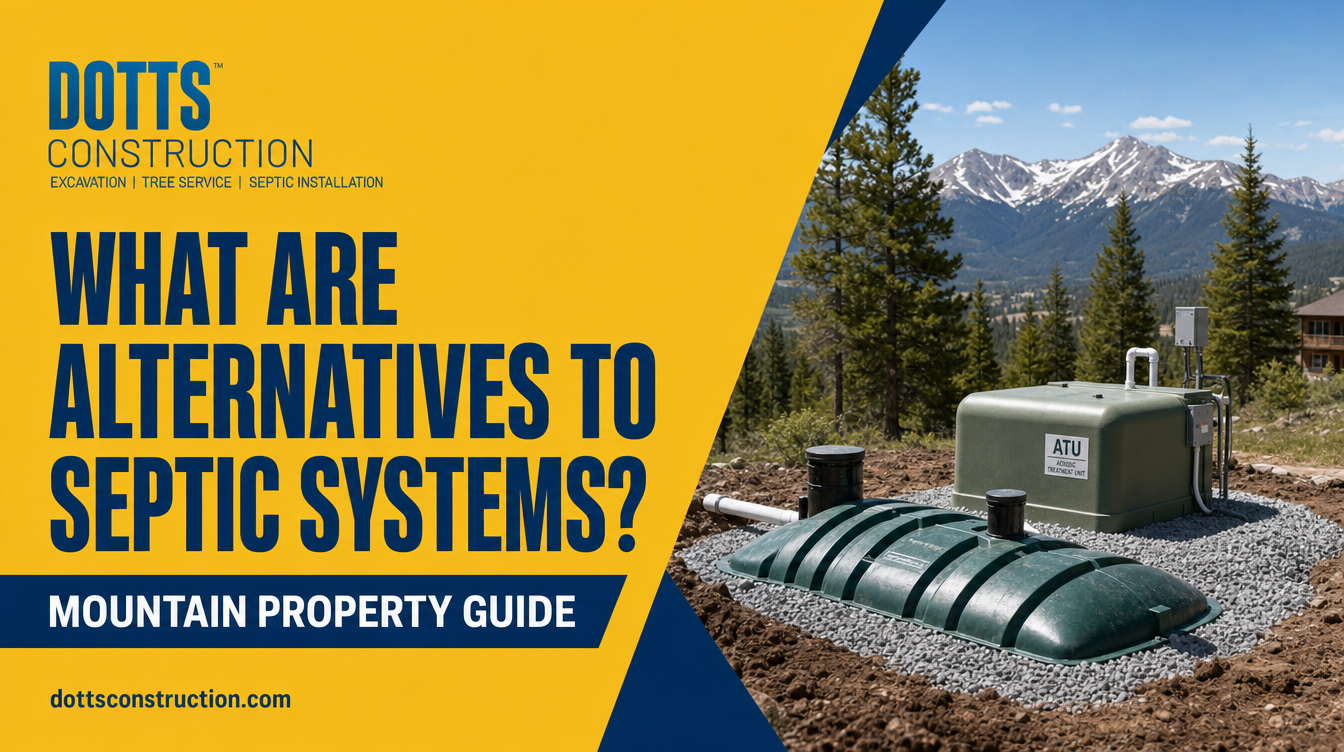
Conventional Septic Won’t Work on Your Property?
Mountain homeowners have several proven alternatives to conventional septic systems when soil conditions, terrain challenges, or environmental restrictions make traditional installations impossible. These include constructed wetlands, aerobic treatment units, sand filters, mound systems, peat filters, textile filters, and advanced treatment technology systems designed specifically for difficult terrain and high-altitude conditions.
Why Do Mountain Properties Need Septic System Alternatives?
Mountain terrain presents unique challenges that make standard septic drain fields problematic. Rocky soil, steep slopes, shallow bedrock, seasonal frost, and variable soil percolation rates all impact how wastewater moves through the ground.
Here's the thing: traditional septic systems rely on gravity-fed drain fields where effluent slowly filters through soil layers. In mountainous areas, you often encounter impermeable rock layers, clay soils with poor drainage, or slopes too steep for proper effluent distribution.
I've worked on countless mountain properties where homeowners assumed they needed expensive blasting or massive site modifications. In reality, alternative wastewater treatment systems often provide better long-term performance while working with the natural terrain instead of against it.
The elevation factor matters too. Higher altitudes mean colder temperatures that slow bacterial breakdown, shorter growing seasons for vegetation-based systems, and potential freeze-thaw cycles that can damage traditional septic components.
What Are Constructed Wetlands for Mountain Wastewater?
Constructed wetlands use engineered plant-soil-microbe systems to treat wastewater naturally. These systems work exceptionally well in mountain environments because they handle temperature variations, require minimal energy input, and integrate seamlessly with natural mountain aesthetics.
The process works in three stages:
- Primary treatment removes solids in a septic tank or settling basin
- Secondary treatment occurs as wastewater flows through gravel beds planted with marsh vegetation
- Tertiary polishing happens in deeper water zones where remaining nutrients get absorbed
Constructed wetlands produce cleaner effluent than traditional septic systems. According to the EPA's 2024 Decentralized Wastewater Treatment Systems Guidelines, properly designed constructed wetlands remove 85-95% of biological oxygen demand and 90-99% of total suspended solids.
Mountain installations benefit from natural slope integration. Instead of fighting steep terrain, constructed wetlands use gravity flow between treatment cells positioned at different elevations.
Pro Tip: Size your constructed wetland at 5-8 square feet per gallon of daily wastewater flow. Mountain systems need the larger sizing to compensate for reduced biological activity during cold periods.
Plants like cattails, bulrushes, and sedges thrive in mountain climates while providing year-round treatment capacity. Even when surface vegetation dies back in winter, root systems and soil bacteria continue processing wastewater below the frost line.
How Do Aerobic Treatment Units Work in Mountain Conditions?
Aerobic treatment units (ATUs) inject oxygen into wastewater to accelerate bacterial breakdown. These systems excel in mountain environments because they produce high-quality effluent regardless of soil conditions and can be installed in smaller footprints than conventional drain fields.
ATUs process wastewater through forced aeration. Electric blowers pump air into treatment chambers where aerobic bacteria consume organic matter 5-10 times faster than anaerobic processes used in traditional septic tanks.
The output quality from ATUs approaches secondary sewage treatment plant standards. This cleaner effluent allows for smaller drain fields, drip irrigation disposal, or direct discharge to surface water where permits allow.
Mountain installations benefit from ATU consistency. Cold temperatures that slow traditional septic processing have minimal impact on forced-air systems. The continuous aeration prevents odors and maintains treatment efficiency even during extended freezing periods.
Installation requirements include:
- Electrical connection (typically 1-3 kWh per day)
- Level installation pad (concrete or gravel)
- Access for quarterly maintenance inspections
- Emergency power backup recommended for remote locations
Modern ATUs like the Norweco Singulair and Hoot Systems AX20 include alarm panels that alert homeowners to pump failures or system malfunctions. This monitoring capability is crucial for mountain properties where service calls can be challenging during winter months.
What Are Sand Filter Systems for Mountain Properties?
Sand filter systems pump septic tank effluent through engineered sand beds that provide additional filtration before soil absorption. These systems work well in mountain environments with poor native soil conditions or limited space for conventional drain fields.
The sand filtration process removes pathogens and nutrients through physical straining and biological treatment. As effluent passes through sand layers, bacteria colonies form biofilms that break down remaining organic matter.
Two main sand filter types serve mountain applications:
Recirculating sand filters pump effluent multiple times through the same sand bed, increasing treatment efficiency. These systems handle variable daily flows well and work in freezing conditions when properly insulated.
Single-pass sand filters treat effluent once through deeper sand beds. They require larger areas but need less mechanical equipment and ongoing maintenance.
Sand filter installations typically need 2-4 square feet of filter area per gallon of daily wastewater flow. The sand medium must meet specific gradation requirements with effective particle sizes between 0.25-0.75 mm for optimal treatment.
Mountain installations require freeze protection. Bury distribution pipes below the frost line and insulate exposed components. Some systems use heated pump chambers or recirculation to prevent freeze-ups during extreme cold periods.
Note: Sand filters still need soil absorption areas for final effluent disposal, but these can be 50-75% smaller than conventional drain fields due to the higher quality effluent.
What Are Mound Systems and How Do They Handle Steep Terrain?
Mound systems build elevated drain fields using imported sand and soil when native conditions won't support conventional absorption. These systems work exceptionally well on mountain properties with shallow bedrock, clay soils, or seasonal high water tables.
Mound construction creates optimal soil conditions where none exist naturally. Engineered fill provides proper depth, drainage, and treatment capacity regardless of underlying rock or clay layers.
The installation process involves:
- Site excavation and preparation
- Sand filter bed construction (typically 2-3 feet deep)
- Distribution network installation
- Cap soil placement and seeding
Mound systems handle slopes up to 20% grade when properly designed. Effluent distribution along the contour prevents channeling and ensures even loading across the absorption area.
Sizing requirements for mound systems average 50-100% larger than conventional drain fields. This increased area compensates for the shorter effluent travel path through imported media versus natural soil profiles.
Mountain mound installations benefit from natural drainage and gravity flow distribution. Position mounds to take advantage of prevailing winds for moisture evaporation and avoid low-lying areas where cold air settles.
Maintenance involves annual inspection of distribution components and vegetation management. Proper grass cover prevents erosion while deep-rooted shrubs or trees can damage distribution pipes.
How Do Peat Filter Systems Work for Mountain Applications?
Peat filter systems use sphagnum peat moss beds to provide advanced wastewater treatment through biological and chemical processes. These systems work well in mountain climates because peat naturally resists freezing and provides consistent treatment performance across temperature ranges.
Peat filtration removes nutrients and pathogens through multiple mechanisms:
- Biological treatment from microorganisms living in peat structure
- Physical filtration through fine peat particle matrix
- Chemical adsorption of phosphorus and heavy metals
- Ion exchange that removes nitrogen compounds
Peat systems typically require 1-2 square feet of filter area per gallon of daily wastewater flow. The peat medium needs periodic replacement every 8-12 years, but the underlying infrastructure remains permanent.
Installation requirements include:
- Concrete or fiberglass filter tank
- Underdrain collection system
- Peat medium (6-12 inches deep)
- Distribution piping with pressure dosing
- Final soil absorption area
Mountain installations benefit from peat's insulation properties. The organic material maintains biological activity even when surface temperatures drop below freezing.
Effluent quality from peat filters approaches drinking water standards for many parameters. This high treatment level allows for smaller soil absorption areas and potential reuse applications like landscape irrigation.
What Are Textile Filter Systems?
Textile filter systems use synthetic fabric media to filter septic tank effluent before soil absorption. These systems provide consistent treatment performance in mountain environments while requiring minimal space and maintenance compared to other alternative systems.
Textile filtration works through physical straining and biological treatment. Geotextile fabrics with controlled pore sizes capture particles while allowing beneficial bacteria colonies to establish on fabric surfaces.
Installation typically involves:
- Pump chamber for effluent dosing
- Filter housing (concrete, plastic, or fiberglass)
- Replaceable textile filter modules
- Treated effluent distribution to soil absorption area
Textile systems handle variable flow rates well because fabric media doesn't clog like sand or gravel filters. This flexibility suits mountain properties with seasonal occupancy or variable household sizes.
Filter replacement occurs every 3-5 years depending on household loading and maintenance practices. The textile modules lift out easily without excavation or specialized equipment.
Performance data shows textile filters remove 85-95% of suspended solids and reduce biochemical oxygen demand by 70-85%. This treatment level produces effluent suitable for shallow soil absorption or drip irrigation disposal methods.
Mountain installations benefit from textile systems' compact footprint and mechanical reliability. These systems work well in areas with limited access for large equipment or ongoing maintenance operations.
What Advanced Treatment Technologies Work in Mountains?
Advanced treatment systems combine multiple technologies to produce near-potable water quality effluent. These systems work well for mountain properties with strict environmental regulations, limited soil absorption capacity, or reuse applications.
Membrane bioreactor (MBR) systems combine biological treatment with ultrafiltration membranes. These systems produce exceptionally clean effluent suitable for surface discharge or irrigation reuse while handling temperature variations well.
Sequencing batch reactors (SBRs) treat wastewater in timed cycles of filling, aeration, settling, and decanting. Mountain installations benefit from SBR flexibility to handle variable flows and seasonal occupancy patterns.
Moving bed bioreactor (MBBR) systems use plastic media carriers that move freely in aerated tanks. The high surface area for bacterial growth provides excellent treatment performance in compact installations suitable for challenging mountain sites.
Ultraviolet disinfection systems eliminate pathogens from treated effluent without chemical additives. UV systems work well in mountain environments because they handle variable flows and require minimal maintenance between seasonal service calls.
Combined system approaches integrate multiple technologies for specific site conditions. For example, an ATU followed by sand filtration and UV disinfection provides maximum treatment flexibility for sensitive mountain watersheds.
When Should You Choose Each Alternative System?
Different mountain conditions call for specific alternative septic technologies. Here's how to match systems to site characteristics:
Choose constructed wetlands when:
- You have adequate space (5+ acres recommended)
- Environmental integration is important
- Long-term operating costs matter more than initial investment
- Seasonal property use allows for natural treatment cycling
Select aerobic treatment units when:
- Soil absorption area is severely limited
- High-quality effluent is required for environmental compliance
- Electrical power is readily available
- You need consistent performance regardless of temperature
Use sand filter systems when:
- Native soils have poor percolation rates
- You need reliable treatment with minimal mechanical components
- Site has moderate space limitations
- Groundwater protection is a primary concern
Install mound systems when:
- Bedrock or clay layers prevent conventional drain fields
- You have adequate space for elevated construction
- Natural drainage patterns support mound placement
- Local regulations allow alternative disposal methods
Consider advanced treatment when:
- Environmental regulations require tertiary treatment levels
- Effluent reuse applications are planned
- Site constraints demand maximum treatment in minimal space
- Surface water discharge permits are available
| System Type | Space Required | Maintenance Level | Initial Cost | Operating Cost |
|---|---|---|---|---|
| Constructed Wetland | High | Low | Moderate | Very Low |
| Aerobic Treatment Unit | Low | Moderate | Moderate | Moderate |
| Sand Filter | Moderate | Low | Low-Moderate | Low |
| Mound System | High | Low | High | Low |
| Textile Filter | Low | Low | Low | Low |
| Advanced Treatment | Very Low | High | Very High | High |
How Much Do Alternative Septic Systems Cost?
Mountain septic system alternatives range from $15,000 to $75,000+ installed, depending on system type, site conditions, and local labor costs. These prices reflect the additional engineering, equipment, and specialized installation required for challenging mountain terrain.
Constructed wetlands typically cost $20,000-$40,000 for residential installations. The higher initial investment pays back through minimal operating costs and 20+ year system life.
Aerobic treatment units range from $15,000-$30,000 installed, plus annual operating costs of $300-$800 for electricity and maintenance. Higher elevation installations may need larger units to compensate for reduced biological activity.
Sand filter systems cost $18,000-$35,000 depending on filter type and soil absorption requirements. Recirculating systems cost more initially but handle variable flows better than single-pass designs.
Mound systems range from $25,000-$50,000 due to extensive excavation and imported materials. Mountain installations often cost 25-50% more than flat terrain due to access challenges and specialized equipment needs.
Advanced treatment systems start at $40,000 and can exceed $75,000 for complex installations. Operating costs range from $1,000-$3,000 annually for electricity, consumables, and professional maintenance.
Additional mountain costs include:
- Winter access surcharges (15-25% premium)
- Specialized equipment for steep terrain
- Frost protection measures
- Extended utility runs for electrical service
- Soil importation for poor native conditions
Pro Tip: Get detailed site evaluations from certified installers familiar with mountain conditions. Soil testing, percolation rates, and seasonal groundwater levels all impact final system selection and costs.
What Permits Do You Need for Alternative Mountain Septic Systems?
Mountain septic alternatives require multiple permits and approvals that vary by state, county, and elevation zone. Start the permitting process 6-12 months before planned installation to account for engineering reviews and seasonal installation windows.
Required permits typically include:
Septic system construction permit from local health departments requires engineered plans, soil testing data, and system sizing calculations. Mountain installations often trigger additional engineering review for slope stability and environmental protection.
Building permits may be required for mechanical equipment, electrical connections, and structural components like concrete tanks or pump chambers.
Water quality permits apply when systems discharge to surface water or when advanced treatment produces reusable effluent. State environmental agencies regulate these applications with specific water quality standards.
Zoning approvals ensure alternative systems comply with setback requirements from wells, property lines, and surface water. Mountain properties often have additional restrictions for wildlife corridors or watershed protection zones.
Engineering requirements mandate professional design for most alternative systems. Licensed engineers must size systems, specify components, and certify installations meet applicable standards.
Inspection schedules require multiple approvals during installation including excavation approval, component placement verification, and final system testing before occupancy approval.
Note: Some mountain areas require backup system provisions or emergency holding tank capacity to handle system failures during periods when repairs aren't feasible due to weather conditions.
How Do You Maintain Alternative Septic Systems in Mountain Climates?
Mountain septic system maintenance requires seasonal preparation and specialized procedures to handle elevation, temperature extremes, and access challenges. Proper maintenance ensures consistent performance and prevents costly freeze-related failures.
Seasonal winterization steps:
Insulate exposed components using foam board, hay bales, or specialized insulation blankets. Pump chambers, distribution boxes, and above-ground equipment need protection from sustained freezing temperatures.
Maintain minimum flow rates to prevent stagnation and ice formation. Use water periodically if properties have seasonal occupancy, or install recirculation systems for vacant periods.
Stock emergency supplies including portable pumps, generators, and communication equipment. Mountain properties may face extended periods when professional service isn't available due to weather conditions.
Year-round maintenance requirements:
Inspect electrical systems quarterly for aerobic units and advanced treatment systems. Backup power systems need regular testing and fuel rotation for remote installations.
Monitor alarm systems that indicate pump failures, power outages, or treatment malfunctions. Many modern systems offer remote monitoring capabilities via cellular or satellite connections.
Schedule professional service annually for complex systems or as required by manufacturer warranties. Plan service calls during favorable weather windows and maintain detailed service records.
Test effluent quality annually or as required by permits. Mountain installations subject to environmental regulations need documented performance data for compliance reporting.
Access considerations for mountain maintenance:
- Clear access roads before winter storms
- Maintain equipment storage at accessible locations
- Establish emergency contact protocols with local service providers
- Keep system documentation and spare parts on-site
Frequently Asked Questions
What's the most reliable alternative septic system for mountain properties?
Aerobic treatment units provide the most consistent performance in mountain conditions because forced aeration maintains biological treatment regardless of temperature variations, and these systems include monitoring equipment that alerts homeowners to potential problems before failures occur.
Can alternative septic systems work above 8,000 feet elevation?
Yes, most alternative septic technologies function effectively at high elevations with proper design modifications including larger system sizing, enhanced insulation, backup power systems, and cold-weather operational procedures to maintain treatment efficiency.
How do alternative systems handle seasonal mountain property use?
Constructed wetlands and sand filter systems handle intermittent use best because they don't require continuous electrical power, while aerobic treatment units and advanced systems need special shutdown procedures or minimal flow maintenance during vacant periods.
Do mountain alternative septic systems require special soil conditions?
Most alternative systems work with poor native soils that prevent conventional septic installations, though mound systems and constructed wetlands may require imported materials to create proper drainage and treatment conditions on challenging sites.
What happens if an alternative septic system fails during winter?
Emergency procedures include pump-out services for holding tank capacity, portable treatment units for critical installations, and temporary connections to minimize environmental impact until permanent repairs can be completed during favorable weather conditions.
How do alternative systems compare for environmental protection?
Advanced treatment systems and constructed wetlands provide the highest environmental protection through superior effluent quality, while sand filters and textile systems offer good protection with lower maintenance requirements than mechanical treatment technologies.
Can you install alternative septic systems on slopes steeper than 30%?
Mound systems, aerobic treatment units, and some constructed wetland designs can work on steep slopes when properly engineered with terracing, retaining structures, and specialized distribution methods to prevent effluent channeling and system damage.
How to Get Started with Your Mountain Septic System Alternative
The first step toward a successful mountain septic installation is getting a comprehensive site evaluation from an experienced installer who understands high-altitude challenges. This evaluation determines which alternative technologies suit your specific soil conditions, terrain, and regulatory requirements.
Start by scheduling soil testing and percolation rate analysis during favorable weather conditions. Mountain soil conditions vary dramatically with elevation and seasonal moisture, so timing these tests correctly ensures accurate system sizing and technology selection.
Contact local health departments early in your planning process to understand specific permit requirements and approval timelines for your area. Mountain communities often have specialized regulations for watershed protection and environmental compliance that impact system design.
Budget for professional engineering when your site presents challenges like steep slopes, poor soils, or environmental restrictions. The additional engineering costs pay for themselves through proper system selection and avoiding costly installation problems.
Plan installation timing around mountain weather patterns. Most alternative systems install best during dry periods when equipment access is reliable and soil conditions are stable. Spring and fall often provide optimal installation windows.
At Dotts Construction, we specialize in transforming challenging mountain sites into stable foundations for alternative septic systems that work reliably year-round. Our Dotts 3M Method ensures we show up when promised, communicate every step of the process, and deliver your septic installation to code and spec so your construction project stays on track.
Ready to explore alternative septic solutions for your mountain property? Request a free consultation or call (719) 280-4141 Schedule your comprehensive site evaluation today and get a detailed proposal outlining the best technology options for your specific conditions.
Related Septic Guides
Planning a septic project? Start with our guide to Septic System Installation in Colorado, then explore:
About the Author
Michael Dotts brings over 15 years of hands-on experience in heavy construction and grading, with a specialty in the unique demands of building in the Rocky Mountains, where steep terrain, rocky ground, and harsh weather change the rules most flatland contractors are used to. Because Michael knows what it really takes to get the job done right in Colorado’s high country, you can count on honest, accurate quotes that won’t creep up halfway through the job.