
How Far Can Your Septic System Be From Your House in Colorado?
Your septic system can be located up to 300 feet from your house in most Colorado counties, but the optimal distance is typically 10-50 feet to balance cost, pumping efficiency, and site conditions. Remote mountain properties often require longer runs due to terrain, soil conditions, and local health department regulations.
Colorado’s diverse terrain creates unique challenges for septic placement that most excavation contractors don’t fully understand. I’ve installed septic systems across the state for over 15 years, from flat plains to steep mountain slopes, and the distance question depends on far more than just regulations.
What Are Colorado’s Legal Requirements for Septic Distance?
Colorado follows the Individual Sewage Disposal System (ISDS) regulations, which set minimum distances rather than maximums. Your septic tank must be at least:
- 10 feet from your house foundation
- 25 feet from wells or water sources
- 5 feet from property lines
- 10 feet from basement walls
The maximum distance isn’t legally restricted, but practical limitations kick in beyond 300 feet. Most counties allow longer runs if you can demonstrate proper slope maintenance and pump capacity.
Here’s what many homeowners don’t realize: these are minimum distances. Just because you can place your tank 10 feet away doesn’t mean you should.
I recommend 20-30 feet as the sweet spot for most Colorado properties. This distance provides enough separation for safety and maintenance access while keeping pumping costs reasonable.
County-Specific Variations
Different Colorado counties add their own requirements on top of state minimums:
- Jefferson County: Requires 50-foot minimum from wells
- Boulder County: Mandates soil percolation tests for distances over 100 feet
- El Paso County: Adds setback requirements for steep slopes over 15%
- Pitkin County: Requires engineering approval for runs over 200 feet
Pro Tip: Always check with your local health department before finalizing septic placement. County requirements trump state minimums, and mountain counties often have stricter rules due to environmental protection concerns.
Why Do Remote Colorado Properties Need Longer Septic Runs?
Remote mountain properties face terrain challenges that force longer septic distances whether you want them or not. I’ve worked on properties where the only suitable soil for a leach field was 150+ feet from the cabin due to rock outcroppings, steep slopes, or seasonal water tables.
Terrain dictates everything in Colorado. You might find the perfect building site on a ridge, but the only soil that will perk for septic is downhill in a meadow 200 feet away. Fighting the terrain costs more than working with it.
Here are the main factors that push septic systems farther from remote houses:
Soil Conditions
Rocky mountain soil often requires searching for the right percolation rates. Your septic designer needs soil that drains but doesn’t drain too fast. Sandy soil drains too quickly and doesn’t filter properly. Clay soil doesn’t drain at all.
Mountain properties frequently have shallow soil over bedrock. I’ve had projects where we found good soil 100 feet downhill from the house but only 6 inches of topsoil near the foundation. The choice was easy.
Slope Requirements
Septic lines need proper slope to function (1/4 inch per foot minimum). On steep mountain properties, this often means running the line farther to find appropriate elevation changes or installing pump systems.
Gravity works better than pumps in remote locations. Every pump adds complexity and potential failure points where service calls are expensive and time-consuming.
Water Table Considerations
Spring snowmelt creates temporary high water tables across much of Colorado. Your leach field needs to stay above seasonal water tables, which might require moving farther from streams, wetlands, or natural drainage areas.
What Are the Cost Implications of Longer Septic Runs?
Distance dramatically affects installation costs, but not always in obvious ways. Total septic system installation typically costs $30,000 to $65,000 depending on soil conditions, location, permit/zoning requirements, and system type. Here’s how distance affects that range:
|
Distance From House |
Typical Installation Cost |
Annual Pumping Cost |
Long-term Considerations |
|---|---|---|---|
|
10-30 feet |
$30,000-$40,000 |
$300-400 |
Easy maintenance access |
|
50-100 feet |
$35,000-$50,000 |
$350-450 |
Standard pumping equipment works |
|
100-200 feet |
$40,000-$55,000 |
$400-550 |
May require hose extensions |
|
200+ feet |
$45,000-$65,000 |
$500-750 |
Specialized pumping equipment needed |
The initial installation cost increase is usually worth it compared to ongoing pumping premiums. A septic system 200 feet from your house might cost more upfront but proper placement prevents expensive problems down the road.
Hidden Distance Costs
Beyond the obvious pipe and excavation costs, longer runs create these often-overlooked expenses:
- Electrical runs for pump systems (if gravity won’t work)
- Access road maintenance for pumping trucks
- Frost protection in longer exposed lines
- Root barriers if the run crosses wooded areas
Plan for the total cost of ownership, not just the installation quote.
How Do You Choose the Optimal Septic Distance for Your Property?
The best septic distance balances five key factors: regulations, soil conditions, access, cost, and future plans. I use what we call the Dotts 3M Method (Measure, Map, Minimize) to find the optimal placement on every property.
Site Evaluation Process
Start with a comprehensive site evaluation before committing to any distance:
- Test soil percolation in multiple locations
- Map seasonal water flow patterns
- Identify utility conflicts (well, power, propane)
- Plan equipment access for installation and maintenance
- Consider future expansion needs
Most excavation contractors skip steps 2 and 4, which creates expensive problems later. Understanding how water moves across your property during spring melt prevents costly redesigns mid-project.
Terrain-Specific Strategies
Flat properties (Eastern Plains): Optimize for shortest practical distance while maintaining proper drainage. Usually 20-40 feet works perfectly.
Moderate slopes (Front Range foothills): Work with natural elevation changes to maintain gravity flow. Often 50-100 feet provides the right slope without requiring pumps.
Steep mountain properties: Find the best soil first, then work backward to house placement. Distance becomes secondary to finding soil that will actually support a septic system.
The Real-World Decision Process
Here’s how I guide homeowners through the placement decision:
First, identify all possible septic locations that meet soil and regulatory requirements. Many properties have only 1-2 viable spots regardless of preference.
Second, calculate total cost of ownership for each option. Include installation, pumping, maintenance access, and utility conflicts.
Third, consider how septic placement affects overall property development. A septic system 150 feet from your house might enable better landscaping, outbuilding placement, or future additions.
The “closest possible” approach often isn’t the smartest long-term strategy. I’ve seen too many homeowners box themselves in with poor septic placement that limited their property’s potential.
What Installation Challenges Arise With Remote Septic Systems?
Remote septic installations face unique challenges that standard suburban contractors often can’t handle. Equipment access, material delivery, and site conditions require specialized experience and planning.
Equipment Access Limitations
Standard septic installation equipment struggles on remote mountain properties. Our crews often need:
- Track excavators instead of wheeled equipment for steep or soft ground
- Smaller trucks that can navigate narrow mountain roads
- Portable concrete mixers when ready-mix trucks can’t reach the site
- Manual labor backup for areas too tight for equipment
The biggest installation mistake is assuming standard equipment will work. I’ve rescued projects where contractors got standard excavators stuck trying to reach remote septic locations.
Weather and Timing Factors
Colorado’s weather creates installation windows that coastal contractors don’t understand:
- Spring mud season makes many sites inaccessible for weeks
- Early snow can shut down mountain projects by October
- Frozen ground prevents winter installations above 8,000 feet
- Summer thunderstorms can flood excavations in hours
Plan your septic installation for late summer through early fall for the most reliable weather window. Spring installations often get delayed by mud or late snow.
Material and Delivery Challenges
Remote properties require different logistics:
- Concrete delivery may require smaller trucks or pumping systems
- Pipe materials need protection from UV exposure during longer installations
- Aggregate delivery costs more per yard to remote locations
- Equipment fuel and service become significant cost factors
Pro Tip: Order materials 20% above calculated needs for remote jobs. Getting additional supplies to a mountain property mid-project costs significantly more than slight over-ordering.
What Pump Systems Work Best for Long Septic Runs in Colorado?
When gravity won’t provide proper slope for long septic runs, pump systems become necessary. Colorado’s elevation changes and climate require pumps designed for mountain conditions.
Effluent Pump vs. Grinder Pump Systems
Effluent pumps handle liquid waste after primary treatment in the septic tank. They work well for runs up to 300 feet with moderate elevation changes.
Grinder pumps handle solid waste and create slurry for longer transport. They’re necessary for runs over 300 feet or significant uphill pumping.
For most Colorado remote properties, effluent pump systems provide the best balance of reliability and cost. Grinder pumps add complexity that creates service challenges in remote locations.
Cold Weather Pump Considerations
Colorado’s temperature swings require pump systems designed for freeze protection:
- Insulated pump chambers prevent freeze damage
- Alarm systems alert to pump failures before backup
- Backup power options for properties with unreliable grid power
- Easy access panels for maintenance in snow conditions
Mountain properties need pump systems accessible for winter service calls. A pump chamber buried under 4 feet of snow becomes inaccessible until spring.
Maintenance Access Planning
Long septic runs require maintenance planning from day one:
- Mark all system components with permanent markers visible in snow
- Create access roads that work for pumping trucks year-round
- Install service ports at key points along long runs
- Plan electrical service for pump controls and alarms
The installation crew that doesn’t plan maintenance access will create expensive service calls later. Every component needs to be accessible in all weather conditions.
How Do Local Health Departments Regulate Remote Septic Installations?
Colorado health departments take remote septic systems seriously due to environmental protection concerns. Mountain counties especially scrutinize installations near watersheds, wildlife habitat, or recreation areas.
Permit Requirements for Extended Runs
Most counties require additional review for septic systems over certain distances:
- Standard permits: Under 100 feet from house
- Enhanced review: 100-200 feet requires soil analysis
- Engineering approval: Over 200 feet needs professional design
- Environmental impact: Near sensitive areas requires additional studies
Jefferson County requires engineering stamps for any system over 150 feet from the house. This adds 2-4 weeks to permit processing but prevents expensive redesigns later.
Inspection Protocols
Extended septic runs face more rigorous inspection schedules:
- Pre-excavation inspection verifies soil conditions match permit application
- Excavation inspection confirms proper depth and slope before pipe installation
- Pipe inspection verifies grade and joint integrity along the entire run
- Backfill inspection ensures proper compaction around long pipe runs
- Final inspection tests entire system operation
Missing any inspection step can require expensive re-excavation to expose buried components. I’ve seen contractors backfill too quickly and have to dig up 200 feet of pipe for re-inspection.
Special Use Permits
Some remote locations require special use permits beyond standard septic permits:
- Wetland proximity may require Corps of Engineers approval
- Historic districts need additional cultural resource clearance
- Wildlife habitat areas require environmental mitigation measures
- Fire district access must meet emergency vehicle requirements
These special permits can add 3-6 months to project timelines. Start the permit process early for remote mountain properties.
What Should You Do Next?
Ready to move forward with your remote Colorado septic installation? The key to success is working with contractors who understand mountain conditions and have the equipment to reach your property reliably.
Start with a professional site evaluation that includes soil testing, terrain analysis, and access planning. Many septic problems stem from poor initial site selection rather than installation errors.
Get quotes from at least three contractors, but verify their remote property experience. Ask for references from similar mountain installations and confirm they own the specialized equipment needed for your terrain.
Plan your timeline around Colorado’s weather patterns. Summer and early fall installations proceed more smoothly and cost less than emergency installations during mud season or winter conditions.
Our Dotts 3M Method has guided successful septic installations across Colorado’s challenging terrain for over 15 years. We show up when promised, communicate every step of the process, and use the right equipment to get your remote property ready for construction without delays or surprises.
Ready to discuss your specific property challenges? Contact Dotts Construction today for a comprehensive site evaluation and honest assessment of your septic installation options.
Frequently Asked Questions
How much does it cost to run septic lines 200 feet in Colorado?
Extended septic runs typically cost $40,000-$55,000 for 200-foot distances, including excavation, pipe, tank, drain field, and installation. Mountain terrain, rock excavation, or pump requirements can increase costs to $45,000-$65,000.
Can I install a septic system myself in Colorado?
Colorado allows property owners to install their own septic systems with proper permits, but most counties require licensed contractors for pump systems or runs over 100 feet. DIY installation voids equipment warranties and creates liability for code violations.
How often do remote septic systems need pumping?
Remote Colorado septic systems need pumping every 2-4 years depending on household size and system capacity. Longer runs may require more frequent pumping due to reduced gravity flow efficiency, especially in systems with pump components.
What happens if my septic system freezes in Colorado winters?
Frozen septic systems require immediate professional thawing to prevent pipe damage and system backup. Proper installation with adequate depth and insulation prevents freezing in most Colorado locations except extreme elevation properties above 9,000 feet.
Do I need a special septic design for rocky Colorado soil?
Rocky soil often requires alternative septic designs including mounded systems, sand filter beds, or engineered fill areas. Standard gravity systems work only when adequate soil depth exists above bedrock for proper filtration.
How do I find qualified septic contractors for remote Colorado properties?
Look for contractors with track excavator equipment, mountain property experience, and proper licensing for your county. Verify references from similar terrain installations and confirm they carry appropriate insurance for remote work locations.
What permits do I need for a remote septic installation in Colorado?
Remote septic installations require county health department permits, possible well permits for water testing, and potentially special use permits for environmental sensitive areas. Processing times range from 2-8 weeks depending on location complexity.
How Do You Know if Your Concrete Septic Tank Has Cracked?
Identifying septic tank cracks early prevents minor issues from becoming expensive system replacements. Here are the warning signs every property owner should watch for:
Sewage odors around the tank area indicate that wastewater is escaping through cracks in the tank walls or lid. These odors are strongest after rain when diluted sewage reaches the surface.
Pooling water or unusually lush grass above the septic tank suggests effluent is leaking into the soil. Cracked tanks allow untreated wastewater to escape, creating these telltale surface signs.
Frequent backups or slow drains throughout the house can signal that a cracked tank isn’t holding waste properly, disrupting the entire system’s hydraulic balance.
High nitrate levels in nearby wells reveal groundwater contamination from septic leaks. If you have a private well, annual testing can catch this problem before it affects your drinking water.
Pro Tip: Walk your property after heavy rains. Wet spots, strong odors, or vegetation changes around the septic area are early warning signs of tank cracks that need immediate attention.
Are Concrete Septic Tanks More Prone to Cracking Than Other Materials?
Concrete septic tanks have both advantages and vulnerabilities compared to plastic, fiberglass, and steel alternatives. The material choice significantly impacts long-term crack resistance.
Concrete tanks offer excellent structural strength and can last 40+ years with proper installation. However, they’re susceptible to chemical corrosion from hydrogen sulfide and physical stress from ground movement. Concrete performs best in stable soil conditions with proper bedding and backfill.
Plastic (polyethylene) tanks resist chemical corrosion but can crack under heavy soil pressure or impact damage. They’re lightweight and easier to install but may not meet local codes in areas with high water tables.
Fiberglass tanks combine chemical resistance with structural integrity. They don’t corrode like concrete but can crack if soil isn’t properly prepared during installation.
| Tank Material | Crack Resistance | Lifespan | Chemical Resistance | Ground Movement Tolerance |
| Concrete | Moderate | 40+ years | Poor | Poor |
| Plastic | Good | 30+ years | Excellent | Moderate |
| Fiberglass | Excellent | 30+ years | Excellent | Good |
| Steel | Poor | 15-20 years | Very Poor | Moderate |
Here’s the thing: Material choice matters less than proper installation. We’ve seen plastic tanks fail in two years due to poor soil prep, while properly installed concrete tanks last decades without issues.
What Special Challenges Exist for Mountain Septic Tank Installation?
Mountain terrain creates unique conditions that increase septic tank cracking risks. Elevation, climate, and soil conditions all demand specialized installation approaches.
Freeze-thaw cycles are more severe at higher elevations. When water in soil cracks freezes, it expands with tremendous force, creating pressure that can crack even properly installed tanks. Tanks must be installed below the frost line, which can be 4-6 feet deep in mountain areas.
Rocky, unstable soils make proper excavation and bedding more challenging. Large rocks create pressure points against tank walls, while loose or sandy soils don’t provide adequate support. Mountain installations require careful soil analysis and often need imported bedding material.
Steep slopes increase water runoff and erosion around septic components. Surface water can undermine tank foundations or create uneven settling that leads to cracks.
Higher water tables during snowmelt season can float tanks out of position or create hydrostatic pressure that cracks tank walls. Mountain systems often need specialized anchoring and drainage features.
How Can You Prevent Concrete Septic Tank Cracking?
Prevention starts with proper installation using proven techniques that account for local soil and climate conditions. The Dotts 3M Method addresses the three critical factors that cause most septic tank failures.
Method 1: Meticulous soil preparation involves testing soil composition, compaction rates, and drainage characteristics before excavation begins. We remove unstable soils and replace them with engineered bedding material that distributes weight evenly.
Method 2: Moisture management includes installing proper drainage around the tank and ensuring adequate slope away from the installation site. Controlling water flow prevents hydrostatic pressure and reduces freeze-thaw damage.
Method 3: Material specifications mean using the right tank for local conditions and following manufacturer installation guidelines exactly. This includes proper joint sealing, adequate cover depth, and appropriate backfill materials.
Pro Tip: Don’t trust contractors who say “all septic installations are the same.” Mountain conditions require specialized knowledge and different techniques than valley or flatland installations.
When Should You Replace a Cracked Concrete Septic Tank?
Not every crack requires immediate tank replacement, but certain conditions demand urgent action to prevent health hazards and property damage.
Replace immediately if cracks allow sewage to contaminate groundwater or surface water. Large structural cracks, especially those wider than 1/8 inch or actively leaking, can’t be reliably repaired and pose serious environmental risks.
Monitor closely hairline cracks that aren’t leaking. Many concrete tanks develop minor surface cracks that don’t affect system function. Annual inspections can track whether these small cracks are growing or remaining stable.
Consider replacement for tanks with multiple crack locations, even if individual cracks seem minor. Multiple cracks indicate widespread structural stress that will likely worsen over time.
The decision often comes down to cost-benefit analysis. If repair costs exceed 50% of replacement costs, or if the tank is over 30 years old with multiple issues, replacement usually makes more financial sense.
What’s the Best Way to Install Septic Systems in Mountain Terrain?
Mountain septic installation requires specialized techniques that most general contractors don’t understand. The challenging terrain demands expertise in soil dynamics, drainage engineering, and high-altitude construction practices.
Site evaluation starts with comprehensive soil testing at multiple depths and locations. Mountain soils vary dramatically within short distances, and what works at one elevation may fail 100 feet uphill.
Excavation techniques must account for rocky conditions and steep slopes. Proper equipment selection and safety protocols become critical when working on unstable ground.
Tank positioning requires careful attention to slope, drainage patterns, and access for future maintenance. The tank must be level and properly supported regardless of surrounding terrain challenges.
System design often includes additional components like pumps, alarms, and specialized distribution systems that aren’t needed in flat terrain installations.
We’ve learned that mountain installations take 30-40% longer than flatland projects, but cutting corners leads to system failures that cost thousands more to fix later.
Comparison: DIY vs. Professional Mountain Septic Installation
|
Factor |
DIY Approach |
Professional Installation |
|
Equipment needed |
Rent excavator, risk damage |
Commercial-grade equipment included |
|
Soil analysis |
Visual assessment only |
Laboratory testing and engineering |
|
Permit knowledge |
Research required |
Handled completely |
|
Installation time |
2-3 weeks (weekends) |
2-3 days continuous work |
|
Code compliance |
Risk of violations |
Guaranteed compliance |
|
Warranty coverage |
None |
Full system warranty |
|
Repair responsibility |
Owner bears all costs |
Contractor stands behind work |
Here’s what most people don’t realize: Mountain septic installation requires specialized permits, soil engineering reports, and inspector approvals that can take months to navigate without professional help. One permit mistake can shut down your entire construction project.
FAQ: Concrete Septic Tank Cracking
How long do concrete septic tanks typically last before cracking?
Well-installed concrete septic tanks can last 40-50 years before developing significant cracks. However, tanks in mountain environments with freeze-thaw cycles and unstable soils may show problems within 15-20 years if not properly installed.
Can small cracks in concrete septic tanks be repaired?
Hairline surface cracks smaller than 1/16 inch can sometimes be sealed with specialized concrete sealers. However, structural cracks or any crack that allows leakage requires professional evaluation and often complete tank replacement.
What’s the most common location for cracks in concrete septic tanks?
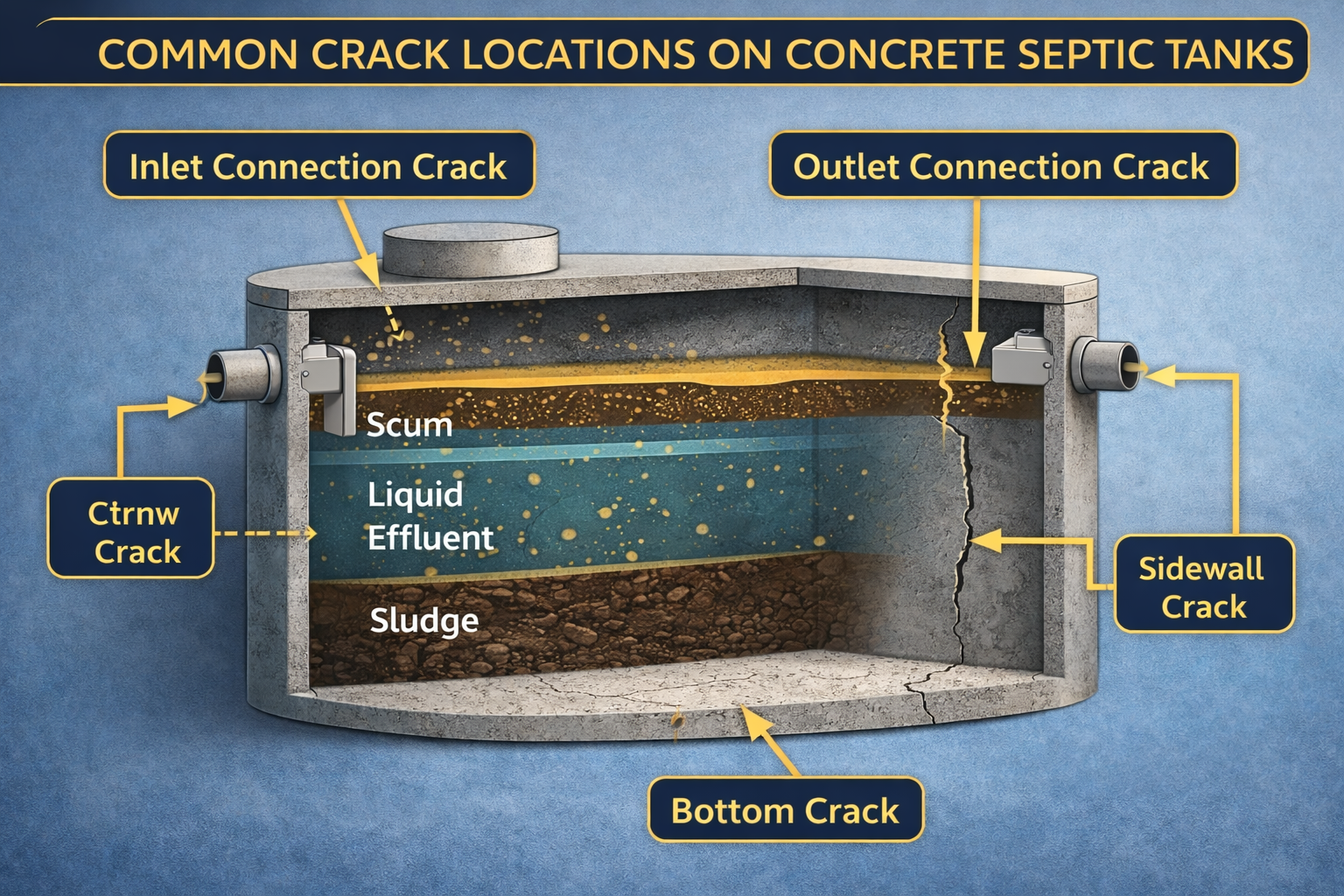
Cracks most commonly develop at the junction between the tank walls and bottom slab, around inlet and outlet connections, and along the tank walls where soil pressure is uneven. Poor backfill compaction creates pressure points that lead to these failures.
How much does it cost to replace a cracked concrete septic tank?
Mountain septic tank replacement typically costs $8,000-$15,000 depending on terrain challenges, tank size, and local regulations. Difficult access and rocky soils can increase costs by 30-50% compared to standard installations.
Do concrete septic tanks crack more in winter?
Yes, freeze-thaw cycles significantly increase concrete septic tank cracking. When water in surrounding soil freezes, it expands and creates pressure against tank walls. This is why proper installation depth below the frost line is critical in mountain areas.
Should I choose concrete or plastic for a mountain septic installation?
The choice depends on your specific soil conditions, local codes, and installation site characteristics. Concrete offers superior strength for rocky soils, while plastic resists chemical corrosion. A qualified installer can recommend the best option for your property.
How often should I inspect my concrete septic tank for cracks?
Annual inspections are recommended for all septic systems, with semi-annual checks for tanks over 20 years old or in challenging environments. Professional inspections can detect problems before they become expensive failures.
How to Get Your Mountain Property Ready for Construction
Don’t let septic system uncertainty delay your construction project. The excavation and septic installation phase sets the foundation for everything that follows, and getting it right the first time prevents costly delays and contractor drama.
Dotts Construction transforms rough mountain terrain into construction-ready sites that meet all codes and stand the test of time. Our 3M Method ensures your septic system will function reliably for decades, not fail when you need it most.
Ready to move forward with confidence? Contact Dotts Construction today for a comprehensive site evaluation and transparent project timeline.